Anansi News
HomeBriefsAsk GhanaTopicsTools
•
•

Stay Informed

Get AI-curated news briefs from Ghana delivered to your inbox every morning. Free forever, no spam.

Explore

  • Home
  • Briefs
  • About

Categories

  • Politics
  • Business
  • Sports
  • Entertainment
  • Africa

Features

  • Analysis
  • Cedi Rates
  • Dollar to Cedi
  • Ghana Gold Price
  • BoG Policy Rate

Topics

  • Armed Forces Recruitment
  • WAEC Results & News
  • Nana Ama McBrown
  • NDC News
  • All Topics

Legal

  • Privacy Policy
  • Terms of Service
Anansi News© 2026. All rights reserved.
Made withfor Ghana
africa

Ghana Advances National Welfare Through Integrated Health, Agriculture, and Infrastructure Initiatives

15th April•3 min read•16 sources
Ghana Advances National Welfare Through Integrated Health, Agriculture, and Infrastructure Initiatives
  1. Home
  2. /Africa
  3. /Ghana Advances National Welfare Through Integrated Health, Agriculture, and Infrastructure Initiatives

Ghana is witnessing a robust phase of multi-sectoral development, characterized by significant advancements in public health, humanitarian support, and local infrastructure. A cornerstone of these efforts is the launch of the Free Primary Healthcare initiative at the Shai-Osudoku District Hospital, aimed at achieving universal health coverage by removing financial barriers for essential services. Complementing this government action, the McDan Foundation and RIDNE Consortium recently executed a GH¢1 million humanitarian intervention for nearly 7,000 widows at La Town Park. This project provided vital health screenings and food supplies, highlighting the critical role of private-sector collaboration in strengthening social safety nets for vulnerable populations.

In the realm of healthcare and research, recent developments have underscored a commitment to maternal and specialized care. A significant study by Kwame Nkrumah University of Science and Technology (KNUST) found that completing at least eight antenatal care visits can reduce the risk of preterm birth by 54% and low birth weight by 31%, advocating for more frequent maternal health visits. On the ground, the healthcare infrastructure received a boost from MODEC, which donated GH¢830,000 in medical equipment to the Assemblies of God Hospital in Saboba—a donation that proved essential after a fire subsequently damaged the hospital’s children’s ward. Furthermore, Tobinco Pharmaceuticals donated GH¢125,000 in blood tonics to the Ghana Prisons Service to enhance inmate welfare and support rehabilitation.

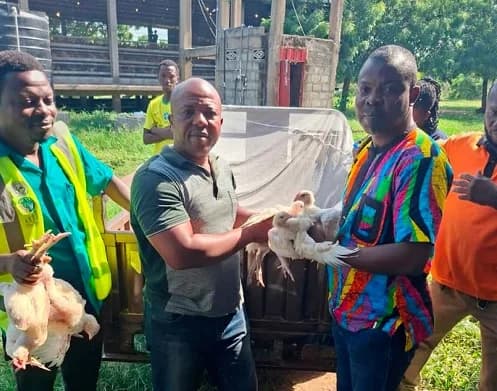
Agricultural and community-led infrastructure projects are also driving progress across several regions. Deputy Minister for Food and Agriculture John Dumelo announced a strategic partnership with the Netherlands to revitalize Ghana’s vegetable seed sector through enhanced research and technical cooperation. Local agricultural productivity is being further empowered by the distribution of 6,000 palm seedlings in New Juaben North and 10,000 chickens in Yilo Krobo under the "Nkoko nkitinkiti" programme. Meanwhile, the Mayekoo foundation, with support from the Jaques family, addressed critical water shortages by installing a new borehole and storage system at Vakpo E.P. Primary School, ensuring safe drinking water for more than 500 pupils.

Finally, Ghana is enhancing its safety and digital rights through maritime, peace-building, and communication initiatives. The Ministry of Transport and Ghana Maritime Authority have launched a national hydrography drive to improve maritime safety and support the blue economy, while a new peace monument in Zebila marks the successful completion of a two-year reconciliation project in Bawku West. Addressing modern threats, civil society groups are advocating for legal reforms to combat Technology Facilitated Gender-Based Violence (TFGBV), aiming to safeguard women's participation in public life. These efforts are supported by the Accra Metropolitan Assembly’s acquisition of a high-tech audio-visual van to modernize public communication and community engagement across the capital.

Our Take

From the Team

Coming Soon

Our team will add key insights, trends, and actionable takeaways to help you stay informed faster.

This story touches markets covered on Anansi Intelligence ↗.

Related topic

Ghana Prisons Service Recruitment: Latest News →

More from africa

Continue exploring similar stories

Chantelle Boye-Hlorkah Reflects on Black Queens' Grueling 2026 WAFCON Campaign and World Cup Playoff Hopes
africa|Yesterday

Chantelle Boye-Hlorkah Reflects on Black Queens' Grueling 2026 WAFCON Campaign and World Cup Playoff Hopes

Black Queens forward Chantelle Boye-Hlorkah has opened up about the emotional and physical toll of the 2026 Women’s Africa Cup of Nations (WAFCON), describing the campaign as a period of significant growth despite falling short of the team's ultimate ambitions. While the Ghanaian national women's team successfully secured a place in the upcoming World Cup playoffs, the sense of unfulfilled potential remains a central theme in the forward's reflection. Boye-Hlorkah emphasized that while the primary goal was to dominate the continental stage, the reality of the tournament provided a sobering look at the competitive landscape of African women’s football and the resilience required to succeed. The tournament, held amidst high expectations from Ghanaian fans, proved to be a grueling test for the athletes. According to Boye-Hlorkah, the experience was marked by intense mental and physical pressure, as the team navigated high-stakes matches against some of the continent's strongest sides. The forward noted that the squad’s objective was to progress much deeper into the knockout stages than they ultimately managed. This desire to do better highlights the rising standards within the Black Queens' camp, where simply participating is no longer viewed as a success, and the drive for continental silverware remains a paramount objective for the technical team and players alike. Despite the disappointment of not clinching the WAFCON title, the qualification for the World Cup playoffs serves as a crucial silver lining for Ghana. This provides the team with a second chance to represent the nation on the global stage, allowing them to apply the lessons learned during their challenging continental run. Moving forward, the focus for Boye-Hlorkah and her teammates will likely shift toward physical recovery and psychological preparation for the playoffs. The experience in the 2026 WAFCON, while difficult, may ultimately serve as the catalyst needed for the Black Queens to refine their strategy and sharpen their competitive edge ahead of their next international assignments.

Sarah Adwoa Safo Reveals Late Father’s Prophecy of Family Feud Following Death of Apostle Kwadwo Safo Kantanka
africa|Yesterday

Sarah Adwoa Safo Reveals Late Father’s Prophecy of Family Feud Following Death of Apostle Kwadwo Safo Kantanka

Sarah Adwoa Safo, the former Member of Parliament for Dome-Kwabenya, has disclosed that her late father, the renowned Apostle Kwadwo Safo Kantanka, predicted the ongoing disputes and divisions currently fracturing their family. Speaking during a formal visit to the New Patriotic Party (NPP) flagbearer, Dr. Mahamudu Bawumia, to express gratitude for his attendance at her father's thanksgiving service, Safo recounted how the legendary industrialist and religious leader had explicitly warned her of the domestic challenges that would follow his passing. The internal friction has manifested in high-profile legal battles and public tensions, specifically between Adwoa Safo and her brother, Nana Kwadwo Safo Akofena I. The disagreement reached a flashpoint over the management and organization of their father’s funeral rites. According to reports, Akofena sought a court injunction to restrain Safo from proceeding with specific funeral arrangements, highlighting a deep-seated rift within the immediate family of the late founder of the Kristo Asafo Mission of Ghana. According to the former lawmaker, these disputes have been significantly complicated by traditional Akan customary practices, particularly those involving the matrilineal family’s role in funeral arrangements. Safo noted that these cultural dynamics exacerbated the existing tensions, making the fulfillment of her father’s warnings a painful reality for the heirs. The conflict has not only divided the siblings but has also drawn in extended family members as they navigate the complex intersection of customary law and the late Apostle’s personal legacy. Despite the internal turmoil, Adwoa Safo remains a visible figure in political circles, using her engagement with Dr. Bawumia to acknowledge the support of the NPP leadership during her family's period of mourning. As legal proceedings continue and the family seeks a path toward resolution, the situation serves as a poignant example of the challenges many prominent Ghanaian families face regarding inheritance and traditional leadership transition. The legacy of Apostle Kwadwo Safo Kantanka, a man celebrated for his innovation, now rests on whether his descendants can reconcile his prophetic warnings with a lasting peace.

A powerful El Nino, currently forming in the Pacific Ocean, is closely associated with low Nile water levels and drought conditions.  By Ebrahim HAMID (AFP)
africa|Yesterday

Environmental Crises and Migration Tragedies: Sudan and Morocco Face Mounting Humanitarian Pressures

The African continent is currently grappling with a dual crisis of environmental degradation and humanitarian instability, as evidenced by the worsening agricultural outlook in Sudan and the tragic loss of life along the borders of North Africa. In Sudan, the combination of a powerful El Nino pattern and ongoing internal conflict has left vital farmlands along the Nile barren, while in Ceuta, authorities have been forced to inter unidentified migrants following a desperate border crossing attempt from Morocco. These events highlight a growing trend of climate-driven displacement and resource scarcity that is testing the resilience of communities across the region and beyond. In Sudan, the situation has reached a critical point as the United Nations warns of a significant surge in hunger. Farmers who traditionally rely on the Nile's seasonal cycles are struggling with delayed rainfall and low water availability, a situation worsened by the rising costs of agricultural inputs linked to geopolitical tensions. While some have attempted to pivot toward drought-resistant crops, the scale of the drought—coupled with the displacement caused by the nation’s war—has made maintaining food security nearly impossible. This agricultural failure reflects a broader regional vulnerability to extreme climate patterns which continue to disrupt traditional farming cycles. Desperation fueled by economic and environmental instability is also driving dangerous migration. In Ceuta, a Spanish enclave, local authorities recently buried four individuals who perished during a border rush from Morocco. These victims were laid to rest in numbered graves using cinderblock plots, a somber reflection of the anonymity associated with the migrant journey. Small gatherings of locals witnessed the burials, which serve as a stark reminder of the human cost of the migration crisis currently unfolding across North African corridors. These challenges are not unique to Africa, as similar patterns of climate-induced water scarcity are triggering innovative responses globally. In India, communities are reviving ancient water harvesting systems such as baoris and johads to combat the failure of modern infrastructure. The restoration of the Moosi Rani Sagar stepwell in Rajasthan provides a potential blueprint for integrating traditional knowledge into modern water management. As climate patterns become increasingly unpredictable, the intersection of environmental failure and humanitarian tragedy underscores the need for comprehensive policy interventions. Moving forward, regional leaders and international bodies must prioritize both immediate humanitarian aid and long-term climate adaptation strategies to prevent further loss of life and ensure the sustainability of livelihoods across the continent.

Nicholas Owen Korletey (right), Presiding Member for the Shai-Osudoku District Assembly,  presenting a laptop to Maxwell Tettey
africa|Yesterday

Shai-Osudoku District Assembly Empowers 58 Persons with Disabilities with Essential Livelihood Support

The Shai-Osudoku District Assembly in the Greater Accra Region has taken a significant step toward social inclusion and economic empowerment by distributing essential livelihood items and financial aid to 58 persons with disabilities (PWDs). This initiative, managed through the assembly’s Social Welfare and Community Development Department, is part of a broader effort to alleviate poverty and foster self-reliance among vulnerable populations. By providing tangible assets, the assembly aims to move beyond mere charity, focusing instead on creating sustainable income-generating opportunities for the beneficiaries within their local communities. During the presentation ceremony, District Chief Executive (DCE) Ignatius Godfred Dordoe, in a speech delivered by Presiding Member Nicholas Owen Korletey, issued a stern warning to the recipients against the sale of the donated items. The distributed goods included high-value equipment such as deep freezers, refrigerators, sewing machines, and wheelchairs, as well as laptops and direct cash grants. Mr. Korletey emphasized that these tools were intended to serve as the foundation for small businesses or to enhance personal mobility and education, rather than being treated as temporary assets for quick financial gain. Beyond the provision of physical items, the event served as a platform for broader social support. Representatives from the National Health Insurance Scheme (NHIS) were present to educate the attendees on new regulations and to facilitate the renewal of health insurance cards, ensuring that the beneficiaries have continued access to essential medical services. The assembly also reiterated its commitment to the long-term success of the program, announcing plans for technical advice and rigorous follow-up monitoring to ensure the equipment is being used effectively for its intended developmental purposes. The gesture was met with appreciation from the local PWD community, with beneficiaries highlighting how the support would transform their daily lives and economic prospects. One recipient, Maxwell Tettey, expressed profound gratitude upon receiving a laptop, noting its importance for his future endeavors. This disbursement reflects the ongoing mandate of local government authorities to utilize the District Assemblies Common Fund for the benefit of all citizens, ensuring that the marginalized are not left behind in the national development agenda.

All
africa
business
education
entertainment
health
news
politics
sports
technology