••
Energy Ministry Outlines $500 Billion Roadmap to Achieve Net-Zero Economy by 2070
•2 min read•1 source
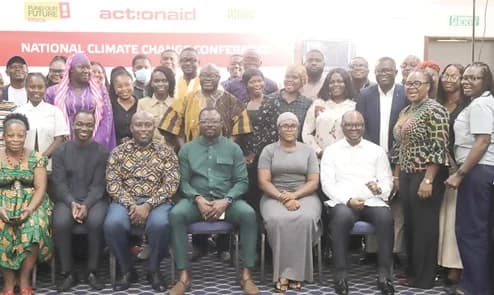
The Ministry of Energy and Green Transition has revealed that Ghana will require approximately $500 billion to successfully transition to a net-zero economy by the year 2070. Speaking at a national climate change conference in Accra organized by ActionAid Ghana, Seth Mahu, a Technical Advisor to the Minister, emphasized that achieving this ambitious target hinges on robust collaboration between the government, civil society, financial institutions, and the private sector. This massive financial requirement reflects the scale of the infrastructure and policy shifts needed to decarbonize the national economy and ensure environmental sustainability over the coming decades.
Ghana’s current renewable energy capacity stands at 342.5 Megawatts (MW), which accounts for approximately 6% of the national energy mix. To bridge the gap toward net-zero, the government has established a roadmap with specific incremental milestones, targeting a 10% renewable energy capacity by 2030 and scaling up to 20% by 2070. Mr. Mahu stressed that the transition must be comprehensive and inclusive, moving beyond the power sector to integrate critical areas such as agriculture, water resources, and transportation. This multi-sectoral approach is designed to ensure that the shift to green energy supports broader economic stability and equitable growth.
Key stakeholders have echoed the call for a unified, economy-wide strategy to manage the transition. Dr. Charles Ofori from the Africa Centre for Energy Policy (ACEP) highlighted the necessity of a holistic perspective to ensure that no sector is left behind as the nation moves away from carbon-intensive practices. Similarly, John Nkaw, Country Director for ActionAid Ghana, underscored the importance of establishing sustainable funding mechanisms and clear policy recommendations to guide both private and public investments. These experts agree that transparency and equity must remain at the forefront of Ghana's climate policy formulation.
As the government under President John Mahama continues to develop these long-term energy strategies, the focus remains on creating policies that protect vulnerable populations while attracting the necessary global and local capital. The $500 billion roadmap serves as both a significant challenge and an invitation for partners to invest in Ghana’s green future. The ultimate success of the 2070 net-zero goal will depend on the effective implementation of these frameworks to modernize the nation’s infrastructure and secure long-term energy sovereignty.
Related topic
John Mahama: Latest News & Updates →

