••
GAPTE and Urban Roads Report Major Traffic Breakthroughs in Accra and Kumasi Amid Infrastructure Debate
•3 min read•3 sources
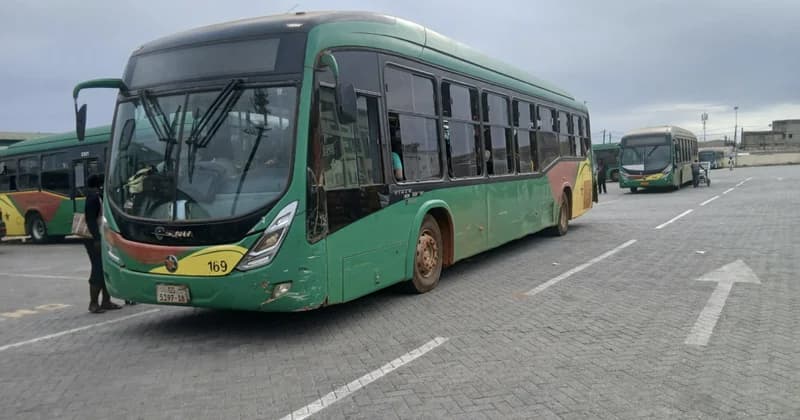
Significant advancements in Ghana’s urban mobility are taking shape as new traffic management strategies in Accra and large-scale infrastructure projects in Kumasi report promising results. The Greater Accra Passenger Transport Executive (GAPTE) recently recorded a drastic reduction in travel times on the Adenta-Accra corridor, while progress on the Suame Interchange in the Ashanti Region promises to alleviate chronic congestion in Kumasi. These developments come amid a broader national conversation regarding the balance between high-tech traffic enforcement and the essential maintenance of existing road infrastructure.
In a major win for commuters, GAPTE reported that the implementation of a new contra-flow arrangement for Ayalolo Bus Rapid Transit (BRT) services has transformed the morning commute on the Adenta-Accra corridor. According to GAPTE, journey times that previously reached up to two and a half hours dropped to just 23 minutes during peak hours on the first day of the new arrangement. This intervention successfully moved approximately 8,000 passengers with unprecedented efficiency. Supported by the Motor Traffic and Transport Department (MTTD), the strategy prioritizes the movement of people over individual vehicles, though officials have urged continued public cooperation to ensure the long-term success of the strategy.
Meanwhile, in Kumasi, the Ashanti Regional Director of Urban Roads, Ing. Nana Atta Poku Agyemang, has highlighted the strategic importance of the ongoing Suame Interchange project. As a cornerstone of the government’s "Big Push" road program, the project is designed to complete Kumasi’s inner ring road network and provide a permanent solution to the gridlock in the Suame enclave. While the main interchange is officially slated for completion in April 2028, authorities indicated that the contractor may revise the timeline for an earlier finish, which would significantly enhance connectivity and economic activity across the northern sector of the city.
Despite these gains in physical infrastructure and transit management, the rollout of new traffic technology has met with public scrutiny. The Ghana Police Service’s TRAFFITECH-GH initiative, an automated system for traffic enforcement, has sparked debate regarding government priorities. Critics, including social commentator Efia Odo, argue that authorities should prioritize repairing malfunctioning traffic lights across the capital before investing in sophisticated camera enforcement. This discourse highlights a growing demand for a holistic approach to road safety that combines modern surveillance with reliable, well-maintained basic infrastructure.
As Ghana continues to invest in both high-capacity transit corridors and complex interchanges, the focus remains on reducing the economic and social costs of urban congestion. The success of the GAPTE contra-flow suggests that immediate management strategies can yield significant results, while long-term projects like the Suame Interchange provide the structural backbone for future urban growth. Moving forward, the government and transport authorities must navigate the dual challenges of completing large-scale projects while maintaining the daily functionality of the nation's existing road signals and enforcement tools.
