••
Frank Adu Jnr Invested as AUCB Chancellor Amid Growing Calls for African Higher Education Reform
•3 min read•4 sources
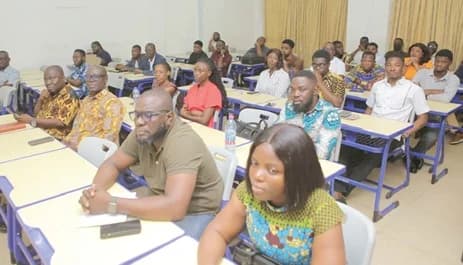
The landscape of higher education in Ghana and across the continent is undergoing a strategic shift toward industry alignment and digital transformation. This movement was underscored by the recent investiture of Frank B. Adu Jnr as the first Chancellor of the African University of Communications and Business (AUCB) in Accra. During the ceremony, Adu Jnr outlined an ambitious five-point vision designed to bridge the gap between academic theory and corporate reality. This leadership transition follows AUCB's significant milestone of receiving a presidential charter in December 2024, which granted the institution full autonomy to operate as a technology-driven university after over two decades of evolution from its communications-specialist roots.
Adu Jnr’s vision for AUCB focuses on industry-embedded education, ethical leadership, and financial sustainability, aiming to produce graduates who are equipped for a global economy shaped by rapid technological advancements. He emphasized that for universities to remain relevant, they must align their internal operations with the practical demands of the workforce. This institutional pivot reflects a broader regional trend highlighted during the inaugural Higher Education Transformation Convening, hosted by the Mastercard Foundation in Accra on September 24, 2026. At this gathering, African leaders, policymakers, and youth representatives collectively urged for systemic reforms to ensure that higher education institutions are better positioned to meet the continent’s specific economic and developmental goals.
Adding to this momentum of advanced academic training, the Ghana Institute of Management and Public Administration (GIMPA) has formally welcomed a new cohort of 80 master’s students into its School of Technology and Social Sciences (STSS). These students, enrolled in specialized programs including the Master of Science in Financial Economics, have been tasked with mastering complex economic systems to solve contemporary challenges. GIMPA leadership, led by Head of Department Gamel Abdul-Nasser Salifu, coupled this academic welcome with a stern reminder regarding the ethics of modern education, specifically cautioning students against plagiarism and the irresponsible use of artificial intelligence tools.
These combined developments highlight a critical juncture for Ghanaian education, where the focus is moving beyond simple enrollment toward creating specialized, ethically grounded, and industry-ready professionals. As AUCB embarks on its new chapter under Chancellor Adu Jnr and GIMPA expands its postgraduate output, the overarching theme remains consistent: the necessity of reform and adaptation. By integrating digital literacy with traditional academic rigor, these institutions aim to fulfill the collective mandate set forth by regional leaders to transform higher education into a powerful engine for African development and economic resilience.
