••
FDA Intensifies Campaign Against Tobacco and Shisha Use to Safeguard Public Health in Accra
•2 min read•1 source
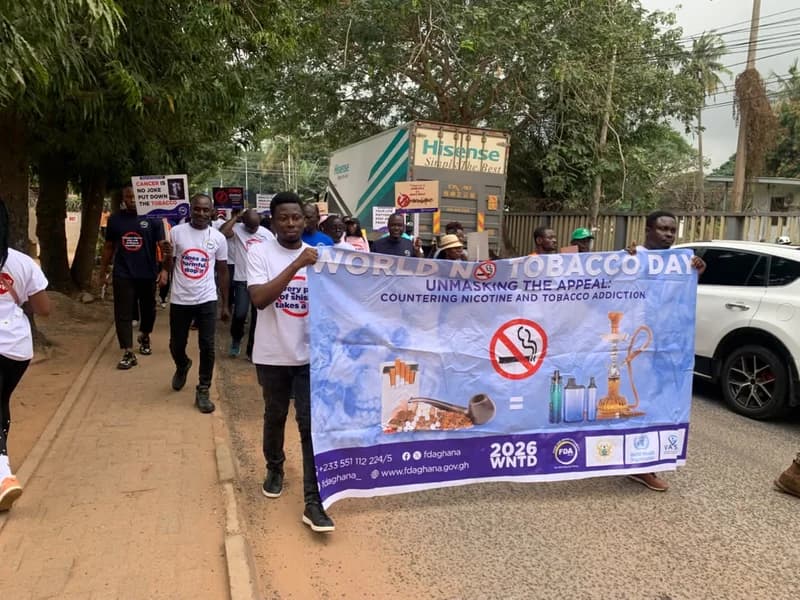
The Food and Drugs Authority (FDA) of Ghana has officially launched a comprehensive public awareness campaign in Accra aimed at educating the public on the severe health risks associated with tobacco and shisha consumption. Commencing from the FDA’s head office and extending to high-traffic hubs like the 37 Lorry Station, the initiative targets a broad demographic including drivers, commuters, and pedestrians. This intensified effort comes as part of a strategic move to curb the rising popularity of tobacco products, particularly shisha, which is becoming increasingly prevalent within social and entertainment spaces across the capital.
While Ghana currently maintains a relatively low tobacco use prevalence of approximately four percent, health officials are concerned about the potential for increased exposure among the younger population. Dr. Martin Kusi, the FDA’s Director of Tobacco and Substances of Abuse, emphasized that preventive measures are crucial to averting long-term health crises such as cancer. He identified peer pressure and social factors as significant drivers of tobacco use among the youth, necessitating a proactive approach to dismantle the influence of tobacco culture before it gains a stronger foothold in the country.
Beyond public education, the FDA is adopting a multi-sectoral approach to regulate the industry and ensure compliance with existing health laws. This includes active engagement with stakeholders in the hospitality and entertainment sectors to enforce regulations regarding tobacco use in public spaces. Furthermore, the Authority is collaborating with national security agencies to enhance surveillance at the borders. This partnership aims to address the unauthorized routes through which tobacco and shisha products enter Ghana, thereby limiting accessibility and protecting the public from unregulated substances. By combining street-level education with high-level stakeholder collaboration, the Authority intends to maintain Ghana’s low prevalence rate and mitigate the long-term public health risks associated with tobacco use.