••
Farmer Globale wins Africa Sustainable Futures Award for rice farming
•2 min read•1 source
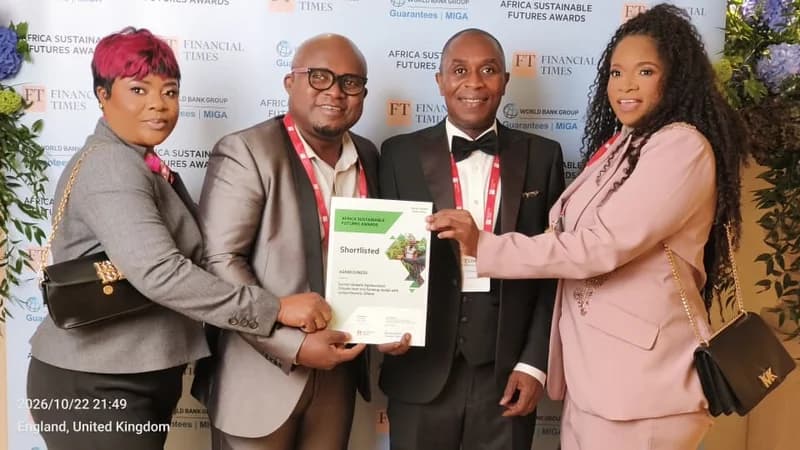
Ghanaian agribusiness Farmer Globale has been honored at the Africa Sustainable Futures Awards for its contributions to climate-smart rice farming. The recognition highlights the company's efforts in transforming Ghana’s rice sector by integrating sustainable practices with smallholder farmer support. The award specifically acknowledges the firm's impact on reducing the environmental footprint of agriculture while improving the economic prospects of rural communities across the country.
Central to Farmer Globale's success is the implementation of the Alternate Wetting and Drying (AWD) technique. This method allows farmers to significantly reduce water consumption and methane emissions—a potent greenhouse gas—without compromising crop yields. Currently, the company partners with more than 20,000 smallholder farmers across Ghana, providing them with the necessary tools and training to adopt these sustainable practices. By focusing on integrated solutions, the agribusiness ensures that local farmers can transition from traditional methods to more efficient, environmentally friendly systems.
Managing Partner Fred Kukubor noted that the company views agriculture not just as a profitable venture but as a critical catalyst for climate action. Since its establishment in 2017, Farmer Globale has worked to bridge the gap between sustainability and market access, ensuring that smallholders are not left behind in the global shift toward green economies. Kukubor emphasized that the goal is to create a model where environmental stewardship and increased farmer incomes go hand-in-hand, particularly through the exploration of carbon finance opportunities.
Looking ahead, this international recognition is expected to bolster Farmer Globale's efforts to enhance food security and rural livelihoods. By securing better market access and promoting sustainable agricultural development, the company aims to scale its operations and further solidify Ghana's position as a leader in climate-smart agribusiness. The award serves as a testament to the potential of local enterprises to drive meaningful change in the global fight against climate change while securing the future of small-scale agriculture.