••
Minister Eric Opoku Commissions $500,000 in Digital Farming Tools for Five Agricultural Colleges
•2 min read•6 sources
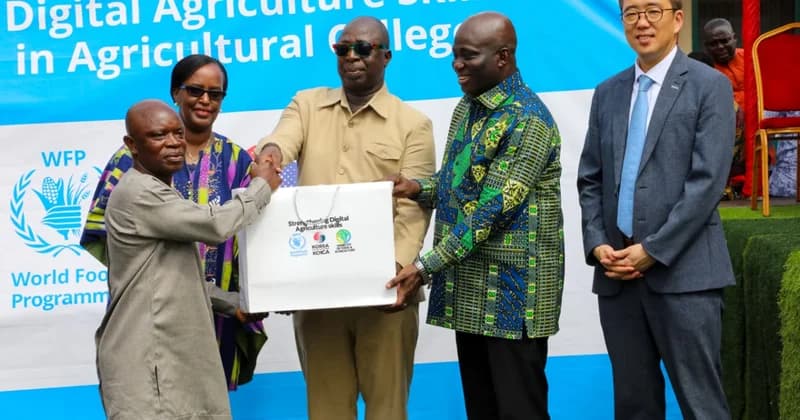
In a significant move to modernize the nation's agricultural sector, five agricultural colleges across Ghana have been equipped with cutting-edge digital farming technology valued at over $500,000. This initiative, a collaborative effort between the World Food Programme (WFP) and the Korea International Cooperation Agency (KOICA), aims to transform agricultural training into a more technology-driven and climate-smart discipline. Minister for Food and Agriculture, Eric Opoku, presided over the handover, emphasizing the government's commitment to equipping students with the tools necessary to thrive in an evolving global agricultural landscape. The donated equipment includes a wide array of precision agriculture tools such as mini drones and flight simulators, GPS devices for mapping, remote weather stations, and soil testers. Furthermore, the colleges received IoT (Internet of Things) sensor kits, moisture meters, greenhouse kits, and specialized agricultural software. According to Minister Opoku, these tools are not merely pedagogical aids but are essential for providing students with hands-on experience that improves decision-making and productivity. This practical exposure is designed to bridge the historical gap between theoretical classroom learning and the actual demands of modern, large-scale agricultural production. The initiative addresses critical challenges facing Ghana's food systems, including climate variability, post-harvest losses, and malnutrition. WFP Country Director Aurore Rusiga and KOICA Ghana’s Dong Wan Woo highlighted that the goal is to produce skilled graduates who can drive efficiency and resilience within the agricultural value chain. To ensure sustainability, the program includes specialized training for instructors, enabling them to effectively integrate these digital technologies into the core curriculum. This focus on climate-smart farming is particularly vital as the sector navigates the unpredictable weather patterns currently affecting Ghanaian farmers. By fostering innovation and digital literacy among the youth, this partnership between the Ministry of Agriculture, the WFP, and the Republic of Korea seeks to build a more sustainable and food-secure future for Ghana. The infusion of agritech into vocational training is expected to attract more young people to the sector, repositioning agriculture as a viable, tech-forward career path. As these five colleges begin implementing the new tools, the long-term objective remains clear: to create a new generation of agricultural professionals capable of ensuring national food sovereignty in an increasingly digital age.

