••
ECG launches nationwide meter audit to curb electricity theft
•2 min read•1 source
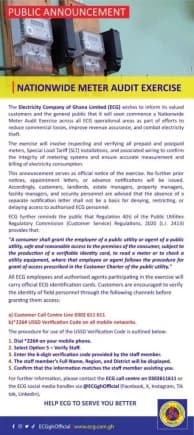
The Electricity Company of Ghana (ECG) has announced the commencement of a comprehensive nationwide meter audit exercise designed to address the persistent challenge of electricity theft. This initiative aims to minimize significant commercial losses that have plagued the utility provider and ensure that all electricity consumed across the country is accurately measured and billed. The audit will cover a wide range of installations, including residential prepaid and postpaid meters, as well as high-consumption Special Load Tariff (SLT) installations.
According to the company, the exercise will involve field personnel visiting various premises, including homes and commercial properties, to inspect the integrity of metering equipment. In a move to ensure the effectiveness of the audit, ECG has stated that no further notifications will be provided to customers or property managers before these inspections take place. This unannounced approach is intended to catch instances of meter tampering or illegal connections that might otherwise be concealed if advance warning were given.
To protect the public from potential imposters, ECG has urged all customers to exercise caution and verify the identity of any person claiming to be an official inspector. Customers are encouraged to use the company’s designated hotlines or official USSD codes to confirm the credentials of field personnel before granting them access to their premises. This security measure is part of the company's commitment to maintaining safety and professional standards throughout the duration of the nationwide exercise.
This audit comes at a time when the ECG is intensifying efforts to improve its revenue collection and operational efficiency. By identifying and rectifying illegal connections and faulty meters, the utility provider hopes to stabilize the power distribution network and ensure a fairer distribution of costs among all consumers. The successful execution of this audit is expected to contribute to the long-term sustainability of Ghana's energy sector by reducing the financial burden caused by non-technical losses.
