••
Democratic Republic of Congo Records Deadliest Ebola Outbreak as Fatalities Surpass 2,300
•2 min read•4 sources
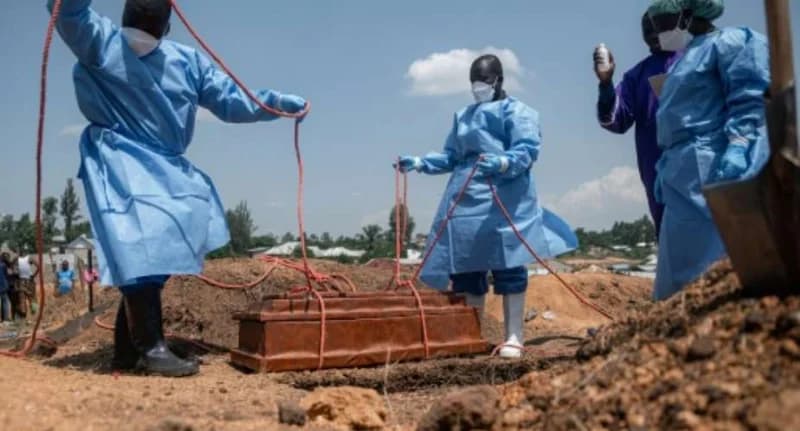
The Democratic Republic of Congo (DRC) is currently battling the deadliest Ebola outbreak in its national history, with official figures reporting 2,325 fatalities and 4,945 confirmed infections. Declared on May 15, 2023, the current crisis has surpassed the death toll of the country's previous major outbreak from 2018 to 2020. This epidemic is now categorized as the second-deadliest Ebola event globally, trailing only the catastrophic 2014–2016 West African outbreak. Health authorities reported 101 new cases in a single 24-hour period recently, highlighting the rapid growth of the virus, which is now claiming a life approximately every 30 minutes.
The response to the crisis is being severely hampered by a combination of systemic failures and local resistance. Community health workers, such as Gédéon Banga Ngbape in eastern Congo, are struggling to maintain contact tracing efforts despite not being paid for over three months. This lack of funding, coupled with a weak national healthcare infrastructure and persistent insecurity from armed groups, has allowed the virus to spread rapidly. Furthermore, deep-seated community mistrust has led many to seek home treatments or avoid medical facilities altogether, further complicating containment efforts and increasing the risk of transmission within households.
Scientifically, the outbreak is being driven by the Bundibugyo strain of the Ebola virus. Unlike the Zaire strain, for which effective vaccines and treatments have been developed, there is currently no approved vaccine or specific medical treatment for the Bundibugyo variant. While the fatality rate among confirmed patients has risen sharply from 20% to 46%, public health experts emphasize that this surge is likely due to the late detection of cases rather than an increase in the virus's inherent severity. Although several experimental vaccines and treatments are currently being assessed in the field, health officials remain concerned about the lack of established clinical tools to fight this specific strain.
While the situation remains critical in the DRC, there has been some success in regional containment. Neighboring Uganda, which initially recorded 20 confirmed cases and two deaths after the virus crossed its border, declared its outbreak over last month. However, the international community has faced criticism regarding the organization and timeliness of the broader response in the DRC. As the epidemic continues to evolve, the focus remains on overcoming local resistance and ensuring that frontline health workers are adequately supported and compensated to prevent further loss of life.