••
Dr Hilla Limann Technical University freshers hold orientation on walkway
•2 min read•1 source
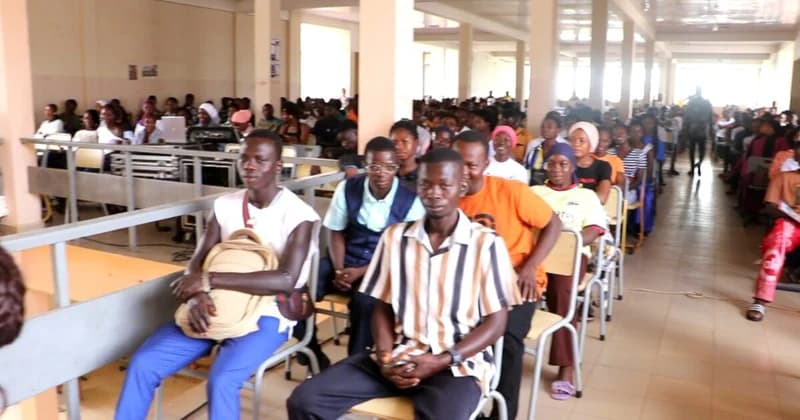
Fresh students at the Dr Hilla Limann Technical University (DHLTU) in Wa were forced to hold their official orientation under an open walkway this week, highlighting a severe lack of infrastructure at the institution. The Vice-Chancellor, Prof. Hamidatu Saaka Dramani, revealed that the university currently lacks a dedicated auditorium or assembly hall capable of hosting major student gatherings. This development occurred during a visit by the Parliamentary Select Committee on Education, which sought to assess the challenges facing the university in the Upper West Region.
The infrastructure deficit extends beyond the lack of an auditorium. Prof. Dramani pointed to a 1,000-bed hostel project that has remained uncompleted for 18 years. Due to structural concerns resulting from nearly two decades of abandonment, the capacity of the facility is being reduced to 600 beds. The Vice-Chancellor emphasized that the absence of adequate housing and teaching facilities is significantly impacting student enrollment and the overall academic atmosphere. She noted that many students are deterred from choosing the university because of the visible lack of basic amenities.
Beyond student accommodation, the university is also struggling with a shortage of workshop spaces and faculty offices. The Vice-Chancellor appealed for urgent government funding to complete the hostel and expand technical workshops, which are critical for the university's mandate in technical and vocational education. The Education Committee acknowledged these hurdles and suggested that the university management explore financing models successfully used by other institutions to expedite project completion. The committee also noted the importance of improving working conditions for faculty to attract and retain qualified staff in the region.
The current state of Dr Hilla Limann Technical University reflects broader challenges in the decentralisation of higher education in Ghana. As the university management continues to lobby the central government for the release of funds, the institution remains constrained in its ability to fulfill its core educational mission. Stakeholders have expressed hope that the committee's visit will trigger the necessary executive action to provide the technical university with the modern facilities required to support its growing student population.
