••
Dolphin washes ashore at Kedzikope beach after 40 years
•2 min read•2 sources
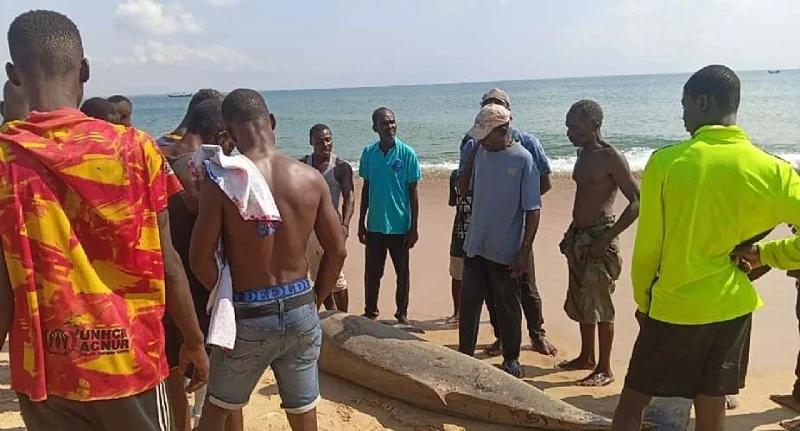
Residents of Kedzikope in the Keta Municipality of the Volta Region were surprised on Sunday when a dolphin washed ashore, a rare phenomenon for the coastal community. The marine mammal, which was initially found alive but with visible bruises, died shortly after reaching the beach. Local accounts suggest this is the first time such an event has occurred in the area in nearly four decades, with the last recorded instance reportedly dating back to 1988.
Seth Adziagba, a local fisherman who witnessed the event, noted that the appearance of the dolphin was highly unusual for this stretch of coastline. Upon discovery, the animal exhibited physical injuries, leading some community members to speculate that it might have been attacked by a larger predator or sustained trauma from maritime activity before being swept to the shore. The death of the dolphin shortly after its discovery sparked a mix of curiosity and concern among the gathering crowd, many of whom had never seen a dolphin at such close range.
The event has triggered a divide in opinion within the Kedzikope community regarding the appropriate response to the dolphin's arrival. While some residents expressed concern over the health of the marine environment, others viewed the occurrence through a spiritual lens. Some residents have called for the performance of traditional rituals to appease the sea and interpret the significance of the event. However, local leaders and authorities have focused on public health and sanitation, making plans to provide the animal with a proper burial to prevent decomposition on the beach.
This incident in the Volta Region mirrors previous occurrences along Ghana's coastline where marine mammals have washed ashore, often prompting discussions about the protection of marine biodiversity. Environmental advocates suggest that such events highlight the need for greater monitoring of coastal health and the impact of human activities on marine life. For now, the focus in Kedzikope remains on the safe disposal of the carcass and the documentation of a rare biological event that has not been witnessed by a generation of local residents.