••
Delhi police detain hundreds of Cockroach Janta Party protesters
•2 min read•2 sources
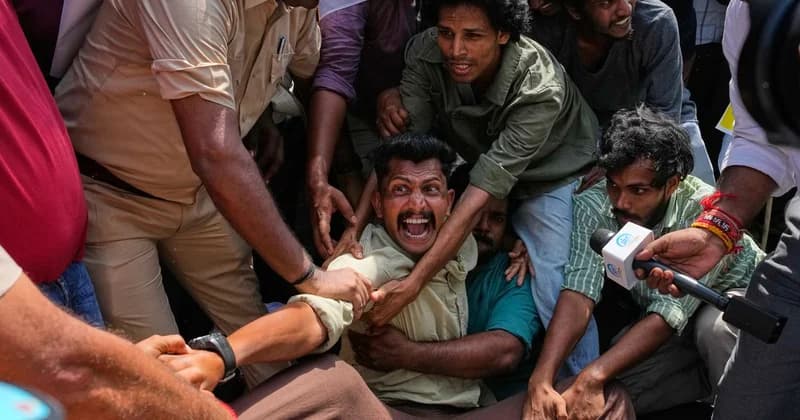
Indian authorities in New Delhi have detained hundreds of activists from the youth-led Cockroach Janta Party (CJP) during a massive demonstration against alleged electoral irregularities. The security crackdown involved the deployment of tens of thousands of personnel across the capital to prevent the group from reaching its intended protest site at Jantar Mantar. The mobilization marks a significant escalation in youth-led resistance against the administration of Prime Minister Narendra Modi and the national Election Commission ahead of upcoming provincial elections.
The CJP, which originated as an online satirical movement launched by Abhijeet Dipke, has rapidly evolved into a grassroots political force. The group’s name was adopted in response to derogatory remarks by India’s Chief Justice, with the movement transforming the label into a symbol of resilience. To stifle the recent protest, security forces established extensive roadblocks and intercepted key leaders at airports before they could join the assembly. Despite the heavy security presence, large numbers of protesters attempted to reach government buildings, leading to the detention of several high-profile public figures and hundreds of supporters.
Central to the movement’s demands is the immediate resignation of Chief Election Commissioner Gyanesh Kumar and a total overhaul of the electoral process. The CJP alleges that voter lists have been systematically manipulated to favor the ruling Bharatiya Janata Party (BJP). Leaders of the movement have urged their members to remain undeterred by the arrests, framing their struggle as a necessary defense of democratic principles in the face of what they describe as a heavy-handed state response.
This intensifying friction between the CJP and the government highlights deepening concerns regarding electoral transparency and the role of youth activism in India. While the immediate gathering in New Delhi was dispersed by police, the movement’s ability to mobilize large numbers suggests ongoing challenges for the political status quo. As the country prepares for critical local elections, the government's approach to such protests continues to draw criticism from opposition voices who argue that the crackdown may undermine national democratic foundations.