••
Karl Deisseroth, Peter Hegemann, and Georg Nagel Win Nobel Prize for Optogenetics as Ghana Medical Innovation Expo Targets Hospital Infrastructure
•3 min read•2 sources
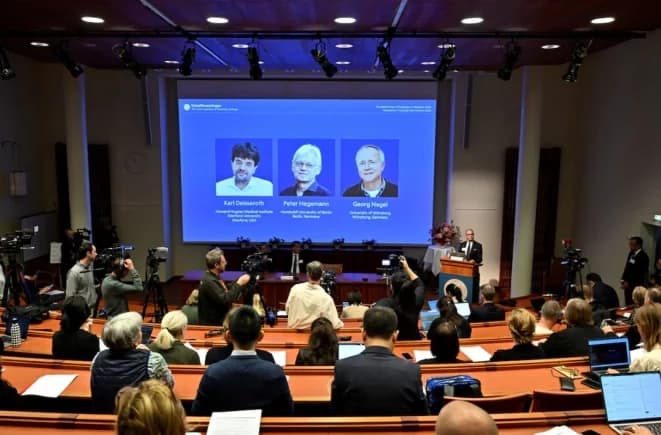
The first week of October 2026 has been marked by significant milestones in medical science and healthcare strategy, ranging from groundbreaking global discoveries in neuroscience to local efforts aimed at solving Ghana's hospital infrastructure challenges. On October 5, the Nobel Assembly announced the winners of the 2026 Nobel Prize in Physiology or Medicine, honoring Karl Deisseroth, Peter Hegemann, and Georg Nagel for their pioneering work in optogenetics. Simultaneously, in Accra, the Ghana Medical Innovation Expo concluded with a strategic call for innovators to develop low-cost, locally maintainable solutions to address the persistent "no-bed syndrome" within the nation’s health facilities.
The 2026 Nobel Prize in Physiology or Medicine recognizes the trio of scientists for their development of optogenetics, a revolutionary technique that uses light to control the activity of nerve cells in the brain. This discovery has fundamentally changed how researchers understand brain function and offers transformative potential for clinical applications, including the restoration of vision for blind patients. The laureates, who will share a prize of 12 million Swedish crowns (approximately $1.2 million), expressed surprise and gratitude for the recognition of their joint efforts. Their work provides the foundation for new treatments for neurological conditions, signaling a new era in precision medicine.
Closer to home, the Ghana Medical Innovation Expo 2026 brought together policymakers, engineers, and healthcare professionals to tackle immediate barriers in the Ghanaian health sector. Organized in partnership with Academic City University and Northeastern University, the three-day event centered on the theme "Beyond the No-Bed Syndrome." Dr. Lawrence Ofori Boadu of the Ghana Health Service (GHS) highlighted the critical need for an integrated bed management system to improve patient referrals and ensure that limited resources are utilized efficiently. The expo emphasized that while high-tech global advancements are vital, the local context requires practical innovations that can be sustained within Ghana's economic framework.
A key focus of the expo was the call for Ghanaian innovators to collaborate directly with frontline health workers to design medical equipment that is both affordable and repairable. Dr. Ibrahim Badejo of Johnson & Johnson MedTech underscored that innovation is most impactful when it targets unmet healthcare needs specifically tailored to local requirements. By prioritizing locally-made solutions over expensive imports that are often difficult to maintain, the initiative aims to build a more resilient healthcare system. These combined efforts—from the global heights of Nobel-winning research to the practicalities of bed management in Accra—underscore a multi-faceted approach to improving human health in 2026 and beyond.
