••
Sir David Adjaye: Mapping the Global Influence of a Ghanaian-British Architectural Icon
•2 min read•1 source
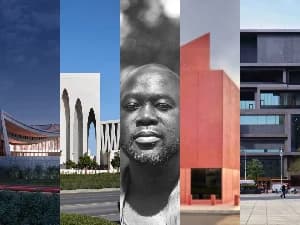
Sir David Adjaye, the celebrated Ghanaian-British architect, has firmly established an international reputation through a series of architectural masterpieces that seek to intertwine history, culture, and public life. Known for his distinctive and thoughtful approach to design, Adjaye’s work spans multiple continents, reflecting a unique ability to translate complex social narratives into physical structures. His portfolio serves as a testament to his status as a visionary whose influence reaches from the heart of West Africa to the most prominent global capitals, making him one of the most sought-after names in contemporary architecture.
One of the most notable examples of his global reach is the Abrahamic Family House in Abu Dhabi. This unique complex is a significant architectural achievement that integrates three distinct places of worship—a mosque, a church, and a synagogue—into a single, cohesive environment. The design emphasizes unity and interfaith dialogue, showcasing Adjaye’s skill in creating spaces that honor diverse religious traditions while fostering a sense of shared community. This project stands alongside his other major international successes, such as his work on the museum focused on African American history in Washington, D.C., which is widely praised for its focus on heritage and its striking cultural presence.
Closer to home, Adjaye’s design for the National Cathedral in Ghana represents a major pillar of his architectural legacy. This project, much like his other works, aims to create a landmark that reflects the soul of a nation and its people. By blending cultural symbolism with modern architectural techniques, Adjaye continues to challenge conventional design boundaries. His contributions to the field go beyond aesthetics; they provide a framework for understanding how public spaces can influence and represent the identity of a society. As he continues to shape skylines across the world, his work remains a powerful bridge between historical context and future aspirations.