••
COP31 climate negotiations collapse in Turkey without agreement
•2 min read•4 sources
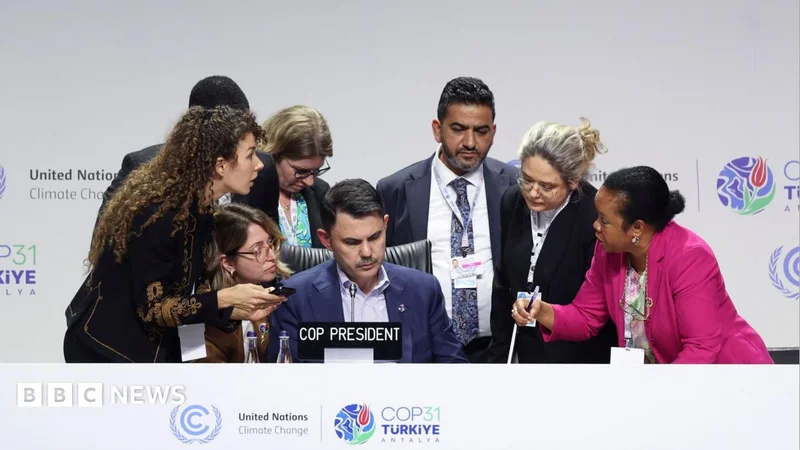
The COP31 climate summit in Antalya, Turkey, has ended in a deadlock, with nearly 200 nations failing to reach a consensus agreement after the longest negotiations in the history of the United Nations climate process. The talks collapsed on Sunday after extending two days beyond their scheduled finish, primarily due to a fundamental disagreement over the inclusion of language regarding the phase-out of fossil fuels. COP31 President Murat Kurum confirmed that no further negotiations would take place, marking a significant setback for international climate diplomacy and leaving key issues of finance and carbon-removing technologies unresolved.
The primary point of contention arose when the European Union and a coalition of climate-vulnerable nations rejected a draft cover decision. These groups argued that the proposed text was unacceptable because it omitted any explicit mention of transitioning away from fossil fuels, a key pillar of previous climate commitments. Conversely, oil-producing states were accused of blocking progress to protect energy security and economic interests, leading to what observers described as a chaotic and frustrating finale. UN Secretary-General Ant3nio Guterres expressed deep disappointment at the outcome, warning that the failure to secure a deal keeps the world on a dangerous path regarding global warming targets.
The unsuccessful conclusion has triggered immediate calls for a fundamental overhaul of the COP process. Critics, including former US Vice President Al Gore, pointed to the summit's record duration and the dominance of fossil fuel interests as evidence that the current consensus-driven model is increasingly unworkable. COP31 chair Chris Bowen acknowledged the deep divisions among the participating nations, noting that the stalemate highlights the diplomatic strains between those seeking urgent emissions reductions and those prioritizing existing energy sectors.
As the Antalya summit closes without a unified path forward, the focus shifts to the urgency of addressing the climate crisis through other channels. The lack of a deal in Turkey means that the contentious debates over fossil fuel diplomacy and financial support for developing nations will likely dominate the agenda for the next major climate summit, which is scheduled to be held in Ethiopia. In the interim, several countries have suggested they may pursue their climate goals and adaptation strategies independently of the stalled international framework.
modernghana.com
PrimarypoliticsBad COP, worse COP: What's next after climate talks fail?
gbcghanaonline.com
politicsCOP31 climate talks collapse in Turkey over fossil fuel dispute
modernghana.com
politicsClimate talks collapse in chaotic end to COP31
modernghana.com
politicsDismay as chaotic UN climate talks collapse without a deal
