••
Care for Society Network International trains male champions in Eastern Region
•2 min read•1 source
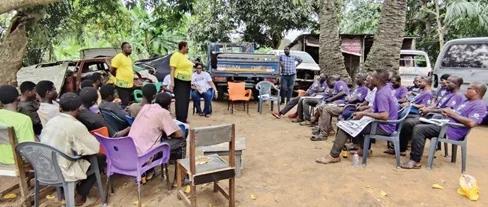
Care for Society Network International (CfSNI) has completed a specialized four-day training session for male champions in the Eastern Region, aimed at fostering safer and more inclusive work environments for women. The initiative specifically targets male-dominated trades, where women often face unique challenges and barriers to entry. By engaging men as allies, the program seeks to dismantle systemic obstacles and create a culture of mutual respect and safety within these technical sectors. The training brought together participants from four key districts: Fanteakwa South, Abuakwa North, New Juaben North, and New Juaben South. This effort forms a core part of the SafeTrade Eastern project, which is being implemented in partnership with the World University Service of Canada (WUSC) through the broader EMPLOY project. During the sessions, Anita Ampofoa Amoako-Gyimah, the Executive Director of CfSNI, emphasized that the responsibility for workplace safety must be shared across genders. She noted that creating safer environments for women is a collective duty that cannot be successfully achieved by women acting in isolation. Throughout the four-day program, participants engaged in deep discussions regarding societal expectations and the restrictive nature of gender stereotypes in the workplace. The curriculum focused on equipping these male champions with the tools necessary to identify and challenge harmful behaviors, such as harassment and discrimination. Central to this training was the introduction of the SafeTrade Safeguarding Toolkit, a practical resource designed to help men support women’s access to technical training and ensure their professional dignity is maintained in competitive, male-heavy industries. Beyond the direct training of community leaders, the initiative includes a robust advocacy component designed to reach a wider audience. CfSNI is utilizing radio programming to spread awareness, with an estimated reach of over 60,000 people across the region. This multi-faceted approach aims to shift public perception and garner broader community support for women pursuing careers in non-traditional fields. By building a network of informed male allies, the project hopes to establish a sustainable model for gender equity that can be replicated in other regions of Ghana.