••
Eseka rail disaster survivors seek justice nearly 10 years after crash
•2 min read•1 source
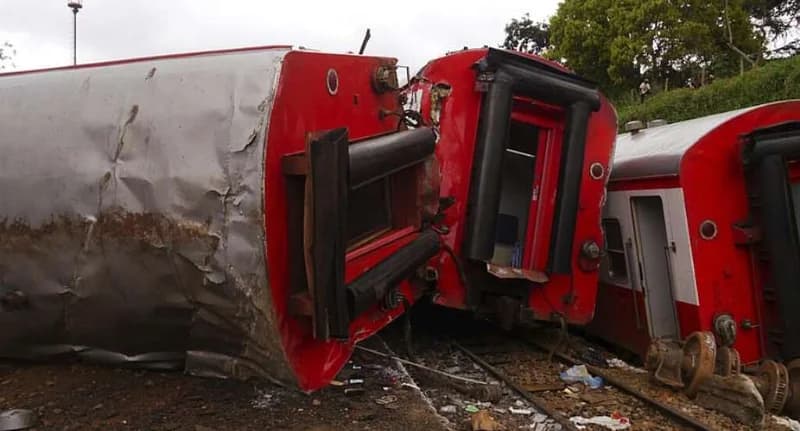
Survivors and families of the 2016 Camrail train derailment in Eseka, Cameroon, are still demanding full compensation and judicial closure nearly a decade after the tragedy. The disaster, which occurred on October 21, 2016, remains a significant point of contention as legal proceedings continue to drag on. Despite a 2018 manslaughter conviction for Camrail and several of its employees, an ongoing appeal process has left many victims feeling abandoned by the judicial system and without the support they were promised.
Investigations into the incident revealed severe negligence on the part of the railway operators. Findings showed the train was traveling at 96 km/h in a zone restricted to 40 km/h, was significantly overloaded, and was operating with faulty braking systems. These technical failures led to a horrific derailment that killed scores of people and injured hundreds more. Survivors have described scenes of absolute chaos, while families of the missing continue to seek closure for loved ones whose remains were never identified or recovered.
In September 2018, a court convicted Camrail and its staff of involuntary manslaughter, but the company immediately appealed the decision, stalling the finality of the case. Furthermore, the compensation packages provided to victims have been widely criticized as inadequate to cover long-term medical costs and the deep emotional trauma suffered by the survivors. The delay in the appeals process has meant that many who were severely injured have been forced to bear the financial burden of their recovery alone.
The corporate landscape of the rail service has changed since the tragedy, with Camrail's operations being sold to MSC in 2022. Despite this transition, the legal and moral obligations to the 2016 victims remain unresolved. For the survivors and the families of the deceased, the passage of nearly ten years has not dimmed their pursuit of accountability, as they continue to call for a legal resolution that acknowledges the full scale of the negligence and the impact of their loss.
