••
Dr. Mahamudu Bawumia Outlines Mining Reforms and Defends Success of Gold-Backed Economic Policies
•3 min read•8 sources
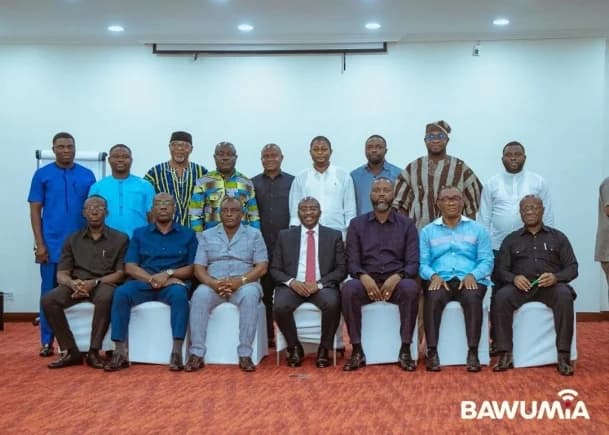
Dr. Mahamudu Bawumia, the flagbearer of the New Patriotic Party (NPP) and former Vice President, has detailed the strategic motivations behind Ghana’s unconventional gold-backed economic initiatives. Speaking at a consultative meeting with the Ghana National Association of Small-Scale Miners (GNASSM) in Accra, Dr. Bawumia explained that the Gold-for-Oil and Domestic Gold Purchase programs were born out of necessity following the cessation of external financing during the COVID-19 pandemic and the Russia-Ukraine war. He revealed that Ghana faced a severe balance of payments crisis and was further constrained by International Monetary Fund (IMF) regulations, which capped the Bank of Ghana’s foreign exchange market interventions at just $80 million per month between 2022 and 2024, contributing to the cedi’s depreciation.
To circumvent these restrictions, Dr. Bawumia proposed leveraging Ghana’s status as a leading gold producer to build reserves and settle fuel costs. The Domestic Gold Purchase program allowed the central bank to buy locally mined gold with cedis rather than scarce foreign currency. According to Dr. Bawumia, this initiative enabled Ghana to accumulate approximately $5 billion in gold reserves over two years. This strengthened reserve position allowed for the lifting of IMF-imposed forex restrictions in January 2025, enabling the Bank of Ghana to increase market support to at least $1 billion per month, significantly stabilizing the national currency.
Beyond macroeconomic policy, Dr. Bawumia proposed a comprehensive overhaul of the extractive sector to address the persistent challenge of illegal mining, known locally as galamsey. He advocated for a shift from punitive measures to a model of formalization, suggesting that supporting small-scale miners to transition into medium-scale operations is the key to sustainable mining. Central to this vision is the establishment of a Minerals Development Bank, which would provide small-scale miners with access to affordable credit, modern equipment, and geological data. He emphasized that since small-scale miners contribute over 52% of Ghana’s total gold production, they must be treated as essential partners in the economy rather than as a problem to be suppressed.
In his concluding remarks, Dr. Bawumia noted that Ghana’s innovative use of gold to support its currency has attracted international attention, with other nations now looking to emulate the model. He committed to ongoing stakeholder engagements to ensure that future reforms prioritize local ownership, environmental sustainability, and job creation. By integrating responsible mining practices with robust reserve-building strategies, the NPP flagbearer argued that Ghana can secure long-term economic stability while protecting its natural resources for future generations.
Related topic
NPP (New Patriotic Party): Latest News →Live rates
Ghana gold price →

