••
Bank of Ghana reports 91-day Treasury bill rate fall to 4.6%
•2 min read•1 source
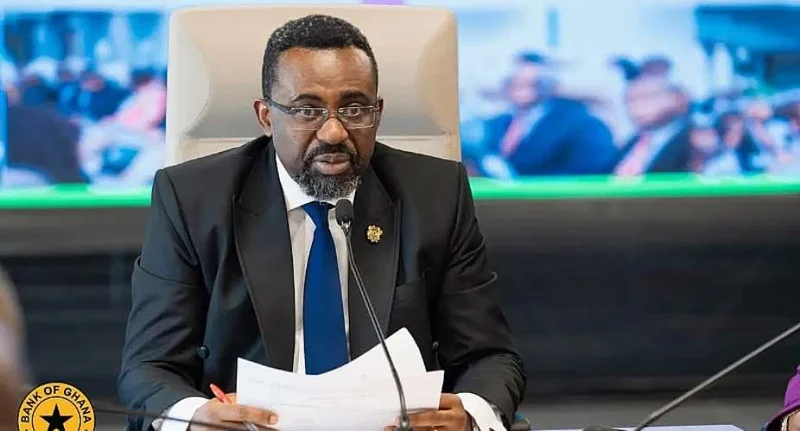
The Bank of Ghana Governor, Dr. Johnson Pandit Asiama, has announced a significant decline in the 91-day Treasury bill rate, which dropped to 4.6% in October 2026 from 10.6% during the same period the previous year. Speaking at a Monetary Policy Committee (MPC) press conference in Accra, the Governor highlighted that this downward trend in short-term interest rates has positively influenced the broader financial landscape. This shift has led to a decrease in average commercial bank lending rates, effectively easing borrowing conditions for both businesses and individuals across the country.
This reduction in rates has directly stimulated private sector activity, with nominal credit to the sector surging by 37.2%. In real terms, private sector credit growth reached 30.0%, reflecting increased liquidity and economic confidence. The banking sector has shown similar resilience, with total assets growing by 21.2% year-on-year. Dr. Asiama noted that key stability indicators, including the Capital Adequacy Ratio and the Non-Performing Loan (NPL) ratio, have improved significantly, pointing toward a more robust financial system capable of supporting sustained growth.
Regarding fiscal performance, the Governor reported that provisional budget data for 2026 shows a deficit of 1.0% of GDP, primarily financed through domestic sources. A primary balance surplus of 1.4% of GDP further underscores the government's commitment to fiscal discipline. On the external front, Ghana achieved a trade surplus of US$13 billion, driven by strong gold exports. While foreign reserves decreased to US$12.1 billion by mid-November 2026 due to external payment obligations, the central bank remains optimistic about the nation's economic outlook despite global market challenges.
Live rates
Bank of Ghana policy rate →
