Anansi News
HomeBriefsAnalysisAsk Ghana
•
•

Stay Informed

Get AI-curated news briefs from Ghana delivered to your inbox every morning. Free forever, no spam.

Explore

  • Home
  • Briefs
  • About

Categories

  • Politics
  • Business
  • Sports
  • Entertainment
  • Africa

Features

  • Analysis
  • Cedi Rates
  • Dollar to Cedi
  • Ghana Gold Price
  • BoG Policy Rate

Topics

  • Armed Forces Recruitment
  • WAEC Results & News
  • Nana Ama McBrown
  • NDC News
  • All Topics

Legal

  • Privacy Policy
  • Terms of Service
Anansi News© 2026. All rights reserved.
Made withfor Ghana
politics

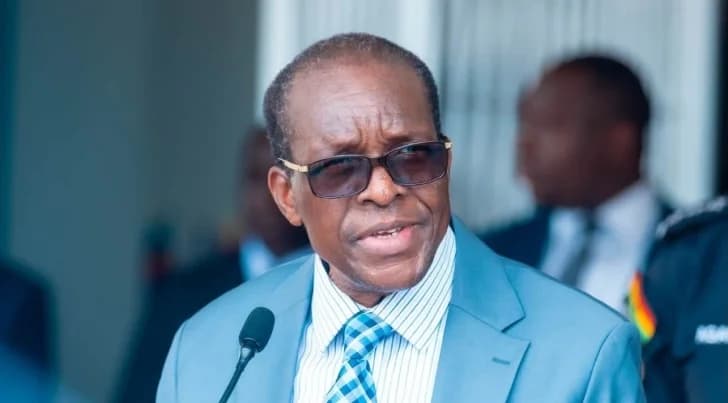
Speaker Bagbin and Former Auditor-General Back OSP Probe into Alleged GH¢70,000 Parliamentary Payment

Yesterday•2 min read•6 sources
Speaker backs OSP's probe into Patricia Appiagyei's GH¢70,000 memo
  1. Home
  2. /Politics
  3. /Speaker Bagbin and Former Auditor-General Back OSP Probe into Alleged GH¢70,000 Parliamentary Payment

Speaker of Parliament Alban Bagbin and former Auditor-General Daniel Yaw Domelevo have officially backed an investigation by the Office of the Special Prosecutor (OSP) into a controversial GH¢70,000 payment allegation. The probe centers on a disputed memorandum reportedly linked to Deputy Minority Leader Patricia Appiagyei, concerning funds allegedly involved in the parliamentary vetting of ministerial and Supreme Court nominees. Speaker Bagbin emphasized Parliament’s full readiness to cooperate with investigative authorities to establish the document's authenticity, warning that any fabrication of official records would be a serious affront to public trust in parliamentary processes.

The investigation follows a firm denial by Patricia Appiagyei, who maintains that she has no involvement with the memorandum or the purported funds. Supporting the OSP’s intervention, Daniel Yaw Domelevo called for a forensic examination of the signature and document to resolve the conflicting claims. Domelevo further raised systemic concerns, questioning why any payments for parliamentary duties—if they existed—would originate from the Presidency rather than Parliament’s own budget. He argued that an independent inquiry is essential to clarify whether such allowances are legitimate or constitute an ethical breach of the separation of powers.

Adding a layer of complexity to the scandal, private legal practitioner Martin Kpebu alleged that such payments to Members of Parliament are not isolated incidents but rather a "longstanding practice." Speaking on TV3, Kpebu claimed that monetary disbursements are routinely made to MPs during vetting exercises, committee meetings, and other legislative proceedings. While Kpebu’s comments suggest a broader culture of internal payments, others have expressed skepticism regarding the investigative process itself. NPP Communications Team member Kwasi Kwarteng voiced doubts about the OSP’s reliability in handling this specific case, calling for additional state institutions to conduct parallel probes to ensure a comprehensive outcome.

As the OSP begins its preliminary investigations, the outcome remains pivotal for the integrity of the current parliamentary term under the administration of President John Mahama. The Speaker has urged the public and the media to exercise caution and avoid premature conclusions until the OSP completes its verification of the facts. The resolution of this case is expected to set a significant precedent regarding the financial transparency of parliamentary committees and the scrutiny of executive-legislative financial interactions in Ghana.

Our Take

From the Team

Coming Soon

Our team will add key insights, trends, and actionable takeaways to help you stay informed faster.

This story touches markets covered on Anansi Intelligence ↗.

Related topic

NPP (New Patriotic Party): Latest News →

More from politics

Continue exploring similar stories

President Mahama Urged to Intervene in TikToker Case Amid Growing Demands for Judicial and Human Rights Reforms
politics|Yesterday

President Mahama Urged to Intervene in TikToker Case Amid Growing Demands for Judicial and Human Rights Reforms

President John Mahama is facing public calls from the political opposition to exercise executive leniency in the case of jailed TikToker Camilla Alhassan. Nana Obiri Boahen, former Deputy General Secretary of the New Patriotic Party (NPP), has publicly questioned why the President has not instructed the Attorney General to withdraw charges against Alhassan, who is serving a one-year sentence for offensive conduct and publishing false news. Despite Alhassan’s guilty plea and subsequent apology, Boahen argued that the President should demonstrate forgiveness, drawing parallels to previous instances where similar leniency was advocated by NPP leadership. This plea for executive intervention coincides with mounting frustration over the state of judicial infrastructure in the Upper West Region, where legal practitioners and state prosecutors have raised alarms over the abandoned multi-million-cedi regional High Court complex. Describing the site as a “cemetery” of unfulfilled promises, stakeholders noted that the project has stalled for two decades, symbolizing significant gaps in the country’s legal system that hinder the efficient administration of justice. While infrastructure and high-profile cases dominate the national discourse, local legislative efforts are intensifying to protect human rights at the grassroots level. Ernest Yaw Anim, the Member of Parliament for Sekyere Kumawu and Chairman of Parliament’s Human Rights Committee, recently convened a major stakeholder meeting to combat child labor and exploitation. In partnership with the International Justice Mission (IJM) and the Commission on Human Rights and Administrative Justice (CHRAJ), Anim urged traditional and religious leaders to take greater responsibility in addressing child exploitation, particularly in areas affected by illegal mining. These domestic developments occur against a backdrop of severe international legal news, as an Egyptian court recently sentenced television presenter Sarah Khalifa and 11 others to death for their roles in an organized drug trafficking syndicate. Khalifa, known for her program “Mission Impossible” and owner of a plastic surgery clinic, was convicted for manufacturing narcotics and possessing unlicensed firearms, with the court seizing over 750kg of drugs and hearing testimony from twenty witnesses. While Khalifa plans to appeal the verdict—which was confirmed after consultation with the Grand Mufti—human rights organizations have noted that the charges do not meet international standards for the death penalty. Collectively, these events underscore a pivotal moment for justice and human rights, placing significant pressure on the Mahama administration to balance legal enforcement with humanitarian considerations and infrastructure development.

Getty Images A photo of King Charles from the shoulders up. He is wearing a patterned suit jacket with a white shirt and tie. He is looking towards the camera and smiling. The background is blurred.
politics|Yesterday

Jamaica Leads Reparations Push to King Charles as Former Sierra Leone Leader Returns Home

The Jamaican government, spearheaded by Culture Minister Olivia Grange, is preparing to submit a landmark petition to King Charles III seeking legal clarity and reparations for the historical injustices of slavery. The petition requests that the King refer three critical legal questions to the Judicial Committee of the Privy Council (JCPC). These questions aim to determine whether the enslavement of Africans was lawful under English law at the time, if it breached international law, and whether the United Kingdom bears a legal obligation to provide redress. Minister Grange emphasized that the move is not merely a demand for payment but a necessary step toward acknowledging historical grievances and seeking justice for African ancestors. The initiative highlights a stark contrast to historical precedents, such as the British government’s 19th-century decision to compensate slave owners for their financial losses while providing nothing to the enslaved people or their descendants. In addition to the legal petition, the Jamaican government is engaging in high-level discussions regarding the repatriation of cultural artifacts currently held by the British Museum. Minister Grange noted that returning these items is essential for restoring national heritage taken during the colonial era. While previous United Kingdom administrations have consistently ruled out the possibility of financial reparations, a spokesperson for Buckingham Palace indicated that the King remains committed to addressing historical wrongs and ensuring the petition is handled through appropriate legal channels. This dual pursuit of legal recognition and the return of stolen heritage represents a significant escalation in Jamaica's efforts to hold the former colonial power accountable for its past actions. Parallel to these developments in the Caribbean, West African politics saw a major turning point as former Sierra Leonean President Ernest Bai Koroma returned to Freetown after treason charges against him were dropped. Koroma had been residing in Nigeria since early 2024 for medical treatment following a violent 2023 coup attempt that resulted in multiple fatalities and subsequent military prosecutions. His return was marked by a high-profile reception involving foreign ministry officials and members of the opposition All People’s Congress (APC). As the country begins to look toward the 2028 presidential elections, Koroma expressed profound relief and happiness to be back on home soil, signaling a potential stabilization of the domestic political climate following years of legal uncertainty. Meanwhile, diplomatic tensions remain high in the Sahel region as France formally dismissed accusations from Niger's military council regarding a failed mutiny. Niger’s ruling junta had alleged that Paris incited an August 29 uprising in which soldiers attempted to storm a military airbase and the presidential palace in Niamey. French Foreign Minister Jean-Noel Barrot characterized these claims as "pure fantasy," reflecting the increasingly fractured relationship between France and its former colony. These disparate events—from Jamaica's legal challenges to the British Crown to the shifting political landscapes in Sierra Leone and Niger—collectively underscore a global movement toward re-evaluating historical ties and asserting national sovereignty in the post-colonial era.

Emmanuel Armah-Kofi Buah (right), Minister of Lands and Natural Resources, handing over documents to Dr Zanetor Agyeman-Rawlings, Minister of Environment, Science and Technology
politics|Yesterday

NDC Chairman Asiedu Nketiah Defends Term Limits as Dr. Zanetor Agyeman-Rawlings Demands Accountability at MESTI

National Democratic Congress (NDC) Chairman Johnson Asiedu Nketiah has strongly advocated for maintaining Ghana’s two-term presidential limit, cautioning against altering constitutional mandates based on the performance of President John Dramani Mahama. Speaking on the broader implications of governance, Nketiah emphasized that while President Mahama has received significant praise from the public and party supporters since his inauguration in January 2025, the integrity of the democratic process must transcend individual leadership. This defense of constitutional norms comes as the Mahama administration continues to stabilize its cabinet and formalize ministerial transitions across various sectors. In a significant administrative handover, Dr. Zanetor Agyeman-Rawlings has officially assumed her post as the Minister of Environment, Science and Technology (MESTI). During the ceremony in Accra, she demanded strict adherence to transparency and accountability among all agencies under her ministry, stressing that prudent resource management is vital for environmental protection. Her predecessor, Emmanuel Armah-Kofi Buah, expressed high confidence in her leadership, citing her long-standing history as an environmental advocate. Meanwhile, the Ministry of Food and Agriculture, led by Eric Opoku, recently honored the legacy of the late Ibrahim Adam, the Fourth Republic’s first Minister of Agriculture, acknowledging his foundational role in establishing Ghana's agricultural extension services. The political climate remains charged as opposition figures and internal critics raise concerns over government strategy and security actions. Nana Obiri Boahen, a prominent figure in the New Patriotic Party (NPP), cautioned the ruling NDC not to underestimate the NPP’s strategic capabilities. Adding to this friction, Dr. Nana Ayew Afriye, the MP for Effiduase-Asokore, criticized the Bureau of National Intelligence (BNI) for what he termed an "absurd" invitation of NPP activist Efya Royal regarding the "Ghana Jollof" probe. Dr. Afriye urged security agencies to utilize sophisticated cyber-intelligence rather than targeting political activists, warning that such actions set a worrying precedent for national intelligence. Beyond central governance, regional development and cultural infrastructure have also taken center stage. Tourism Minister Ablah Dzifa Gomashie is facing pushback over the planned renovation of the National Theatre; while the project aims to modernize the facility with support from China, critics argue that the government has not provided adequate alternative venues for creatives during the closure. Simultaneously, Council of State member Gabriel Tanko Kwamigah-Atokple addressed the 2026 CEANA Conference in Maryland, calling for unity within the Ewe community. He urged leaders to end internal rivalries and focus on attracting investments to the Volta Region, reflecting a broader call for collective action to harness the nation's regional potential.

Dr Ato Forson —  Finance Minister
politics|Yesterday

Vice President Opoku-Agyemang and Cabinet Ministers Detail Multi-Billion Cedi Infrastructure and Social Reform Agenda as Bawumia Proposes New Cocoa Policy

The Government of Ghana, under the administration of President John Mahama, has announced a series of major infrastructure and socio-economic initiatives aimed at accelerating national growth and industrialization. Speaking at various events across the country, Vice President Professor Naana Jane Opoku-Agyemang and several cabinet ministers detailed projects ranging from the establishment of a Women’s Development Bank to a multi-billion dollar expressway expansion. These announcements come as the political landscape shifts toward future development goals, with both the government and opposition outlining competing visions for the nation's primary economic drivers. Finance Minister Dr. Cassiel Ato Forson confirmed that $1.7 billion has already been mobilized for the construction of the Accra-Kumasi Expressway, a project estimated at $4 billion and slated for completion by 2028. Notably, Dr. Forson emphasized that the project will be funded through internal resources without additional borrowing. Complementing this infrastructure drive, Foreign Affairs Minister Samuel Okudzeto Ablakwa announced that the new VIP Lounge at Accra International Airport will be completed by the end of 2026. This project is being funded entirely through corporate social responsibility contributions from local businesses, exemplifying the government’s strategy to deliver public infrastructure without burdening the national treasury. In the energy and technology sectors, Minister for Energy and Green Transition Dr. John Abdulai Jinapor launched a GH― 598 million electrification project to connect 206 communities in the Volta Region, aiming to stimulate job creation and reduce poverty. Simultaneously, Samuel Nartey George, Minister for Communication, Digital Technology and Innovations, has been inspecting rural telephony sites, advocating for a minimum 4G standard to ensure rural communities are not left behind in the global digital transition. To enhance public safety, Transport Minister Joseph Bukari Nikpe announced that a mandatory vehicle towing regime will be implemented in 2027, utilizing modern technological platforms to improve emergency response times on national highways. Social empowerment and local collaboration also featured prominently in recent government activities. Vice President Opoku-Agyemang highlighted the upcoming launch of the Women’s Development Bank, which is designed to provide affordable finance and digital literacy training to female entrepreneurs. On the local level, the Kumasi Nhyiaesohene, Nana Osei Yaw Frimpong II, has pledged traditional authority support to the Electricity Company of Ghana (ECG) to combat encroachment on utility corridors. This partnership is intended to safeguard critical infrastructure and ensure stable power delivery for businesses and households in the Ashanti Region. From the opposition, Dr. Mahamudu Bawumia, the New Patriotic Party (NPP) flagbearer for 2028, is preparing a comprehensive policy package aimed at revitalizing the cocoa sector. Minority Chief Whip Frank Annoh-Dompreh revealed that the proposals address long-standing concerns regarding producer prices, which currently stand at GH¢2,587 per bag, as well as rising input costs and disease control. These competing initiatives from the Mahama administration and the opposition highlight a robust national debate over the best path to achieving sustainable economic stability and agricultural productivity in Ghana.

All
africa
business
education
entertainment
health
news
politics
sports
technology