••
Chief Justice Paul Baffoe-Bonnie Faces Backlash Over "Good Faith" Comments on State Enterprise Performance
•3 min read•10 sources
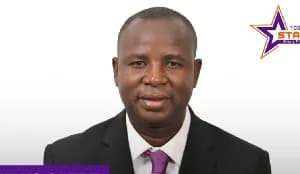
Chief Justice Paul Baffoe-Bonnie is at the center of a growing national debate following comments he made regarding the performance of state-owned enterprises (SOEs) during a series of outreach visits. The controversy began after the Chief Justice visited the Minerals Income Investment Fund (MIIF) and the Social Security and National Insurance Trust (SSNIT) on September 2, 2026, where he reportedly praised the management and progress of these institutions over the last eight years. While the Judicial Service has defended the remarks as being made in "good faith" to strengthen institutional collaboration, the comments have drawn sharp criticism from political figures, legal experts, and civil society, who argue they compromise judicial neutrality.
Members of the New Patriotic Party (NPP) have been particularly vocal in their disapproval. Kwasi Kwarteng, a member of the NPP Communications Team, described the Chief Justice’s remarks as politically motivated and lacking evidence, calling for a retraction or his resignation. The NPP Germany branch echoed these concerns, asserting that while MIIF has been successful, the Chief Justice's praise crossed into partisan territory by potentially crediting the current administration for successes that originated under the previous Nana Akufo-Addo government. Furthermore, Ishaq Ibrahim of the NPP Legal Directorate warned that such public commentary could undermine public confidence in the fairness of ongoing court cases where these state entities might be parties.
Legal and academic experts have also raised concerns regarding the constitutional boundaries of the Chief Justice's office. Dr. Joshua Ebuntie Zaato, a Senior Lecturer at the University of Ghana, argued that the Chief Justice’s assessment of SOEs politicizes the judiciary and should be avoided to maintain public trust. Some critics have gone further, characterizing the outreach visits as "unconstitutional officiousness." They contend that under the 1992 Constitution, the Chief Justice’s role is strictly limited to the administration of the Judiciary and presiding over the Supreme Court, rather than acting as a "touring minister" involved in the operational oversight of state enterprises.
In response to the mounting pressure, the Judicial Service issued a statement through Judicial Secretary Mr. Musah Ahmed, clarifying that Chief Justice Baffoe-Bonnie remains fully committed to the integrity and independence of the judiciary. The statement emphasized that the remarks were intended to promote justice and equality before the law rather than to challenge judicial independence or show partisan bias. This defense was bolstered by some observers, such as Franklin Cudjoe, who pointed to historical precedents of judicial heads visiting state institutions to suggest that the current backlash might be politically exaggerated.
The unfolding situation highlights the delicate balance required of high-ranking constitutional officers in Ghana’s polarized political landscape. As former Auditor-General Daniel Yaw Domelevo noted, officials in sensitive roles must exercise extreme caution to avoid political issues that could lead to future litigation. Whether these outreach visits will continue or if the Chief Justice will retreat to a more traditional administrative role remains to be seen, but the event has reignited a critical conversation about the separation of powers and the perceived impartiality of the nation's highest court.
Related topic
NPP (New Patriotic Party): Latest News →
