••
Dr. Cassiel Ato Forson to Detail ‘New Economy’ in 2027 Budget Amid CSO Calls for Job Creation and Fiscal Discipline
•3 min read•5 sources
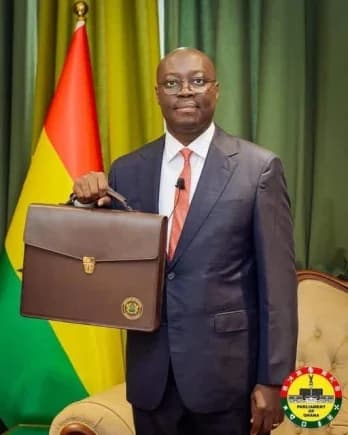
Finance Minister Dr. Cassiel Ato Forson is set to present the 2027 Budget Statement and Economic Policy to Parliament in November, centering on a proposed ‘New Economy’ program designed to accelerate development and stabilize the national economy. Ahead of the presentation, a coalition of Civil Society Organisations (CSOs), including the Economic Governance Platform and the Tax Justice Coalition, has urged the government to pivot the fiscal policy toward aggressive job creation and enhanced revenue transparency. During a forum in Accra, these advocates emphasized that the administration must translate current macroeconomic stability into tangible welfare benefits for citizens, particularly through the closing of tax loopholes and more efficient management of mineral revenues.
Key among the CSO recommendations is the establishment of a unified framework for managing mineral revenues and providing greater clarity on the financing of the Minerals Income Investment Fund. Experts have called for the budget to address the country's tax-to-GDP ratio, which currently stands at 13%, with an ambitious target of 18% by 2027. To achieve this, the Tax Justice Coalition is advocating for stronger actions against illicit financial flows and the introduction of incentives to foster voluntary tax compliance among consumers. Additionally, there is a push to integrate the artisanal and small-scale mining sectors more effectively into the national fiscal framework to bolster domestic revenue mobilisation.
In tandem with these budgetary preparations, the government is intensifying its enforcement of public financial management laws. The Controller and Accountant-General’s Department (CAGD) has issued a stern warning to ministries, departments, agencies (MDAs), and public institutions against the operation of unauthorized bank accounts. The directive prohibits opening accounts with the Bank of Ghana or commercial banks without prior written authorization, signaling a broader effort to ensure strict oversight and prevent the fragmentation of public funds as the 2027 fiscal year approaches.
The political and labor landscape, however, is clouded by the recent passing of Dr. Isaac Bampoe Addo, the Executive Secretary of the Civil and Local Government Staff Association of Ghana (CLOGSAG). Dr. Addo, who died on August 21, 2026, was a pivotal figure in labor relations and a fierce advocate for workers' welfare. The Fair Wages and Salaries Commission (FWSC) described his death as a major loss to organized labor and the public service. Dr. George Smith-Graham, Chief Executive of the FWSC, praised Dr. Addo’s intellect and his significant contributions to the formation of the Independent Public Emoluments Commission (IPEC).
As the Mahama administration prepares its 2027 financial roadmap, the government faces the dual challenge of meeting high expectations for job creation while maintaining the fiscal discipline demanded by oversight bodies. The upcoming budget will serve as a critical test of the ‘New Economy’ vision, requiring the government to balance aggressive development goals with the need for transparency and stable labor relations in the wake of losing one of the most formidable voices in the public sector.