••
Ashaiman Municipal Assembly Empowers 59 Persons with Disabilities with GH400,000 Support Package
•2 min read•1 source
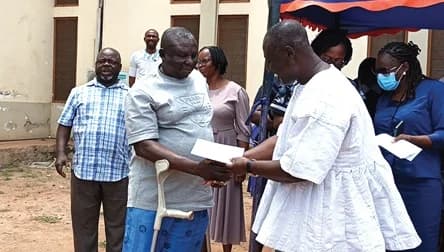
On September 14, 2026, the Ashaiman Municipal Assembly facilitated the distribution of approximately GH400,000 to 59 Persons with Disabilities (PWDs) to foster financial independence and social inclusion. This initiative, funded through the Disability Common Fund, marks a significant effort to transition beneficiaries from a state of dependency to one of economic self-sufficiency. The support package was designed to empower individuals with the means to establish or expand their own small-scale businesses, effectively moving away from a reliance on temporary assistance and street begging.
The total allocation included a substantial financial component and essential equipment tailored to the beneficiaries' specific trades. Specifically, GH242,900 was distributed as direct financial aid, while equipment valued at GH133,405 was provided to enhance income-generating activities. To ensure that the resources reached those in genuine need and with the capacity to utilize them effectively, the Assembly conducted a rigorous screening process. Municipal Chief Executive (MCE) Freeman Tsekpo emphasized that the Assembly would actively monitor the use of these resources to ensure sustainability and accountability in the management of public funds.
The human impact of this intervention was highlighted by Israel K. Golomeke, a 60-year-old visually impaired beneficiary, who advocated for sustainable work opportunities over temporary aid. Golomeke noted that the long-term goal for PWDs must be the ability to manage daily expenses through stable employment or entrepreneurship. Supporting this sentiment, the local Member of Parliament, Dr. Ernest Henry Norgbey, called for greater unity among the PWD community. Dr. Norgbey also stressed the importance of the timely disbursement of funds from the central government to maximize the benefits of such social interventions and ensure they remain effective tools for poverty alleviation.
This distribution is part of a broader municipal strategy to integrate PWDs into the local economy and reduce the prevalence of begging on the streets of Ashaiman. By providing both the capital and the tools necessary for trade, the Assembly aims to create a model of self-reliance. Moving forward, the focus remains on ensuring that these interventions are not isolated events but part of a continuous support system that includes training and market access, ultimately securing a more inclusive and dignified future for all citizens regardless of their physical abilities.