••
Andrews Ofori Larbi urges youth to protect public property at Nkwantakessedo
•2 min read•1 source
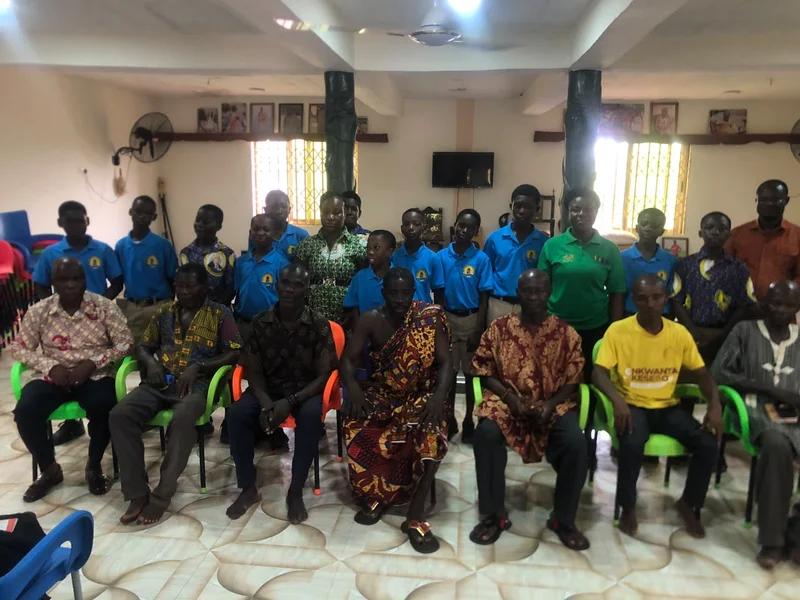
The Western Regional Director of the National Commission for Civic Education (NCCE), Andrews Ofori Larbi, has highlighted the indispensable role traditional authorities play in the development of responsible citizenship among the youth. Speaking during a working visit to the Chief of Nkwantakessedo, Nana Wropah II, Mr. Larbi emphasized that traditional leaders remain the primary custodians of the values and cultural identity necessary for national progress. This engagement underscores the commission's strategy to use local leadership as a bridge for transmitting civic responsibilities to the next generation.
Accompanied by members of the local Civic Education Club, the Regional Director explained that the partnership between the NCCE and traditional stools is vital for instilling discipline and respect in the younger generation. He expressed his gratitude to Nana Wropah II for his willingness to share the rich history and cultural heritage of the area with the visiting students. Mr. Larbi noted that such interactions provide a practical dimension to civic learning that standard classroom instruction cannot replicate, as they connect legal duties with ancestral heritage.
During the engagement, Mr. Larbi directed a specific charge to the students, urging them to embrace their local languages as a mark of cultural pride rather than a hindrance to modernization. He further reminded the youth of their constitutional obligations, specifically citing Article 41 of the 1992 Constitution, which mandates citizens to protect and preserve public property. He warned that the sustainability of national infrastructure depends heavily on the civic consciousness of the youth who will eventually inherit and manage these national assets.
The visit forms part of the NCCE’s broader efforts to engage grassroots leadership in its nationwide civic education campaigns. By integrating traditional wisdom with constitutional education, the Commission seeks to foster a generation of Ghanaians who are both culturally grounded and legally aware of their rights and duties. Nana Wropah II welcomed the initiative, affirming that traditional councils are prepared to support state institutions in the task of nation-building through consistent moral and cultural guidance.