••
Amos Andoh Leads Advocacy for Sickle Cell Education Reform in Ghana’s School Curriculum
•3 min read•3 sources
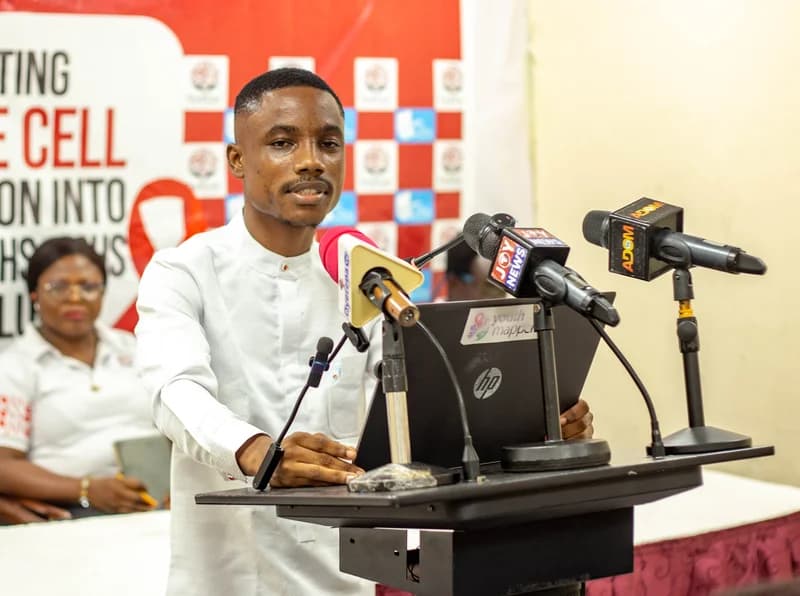
Amos Andoh, the Founder and Executive Director of the Focus on Sickle Cell Foundation (FoSCel), also known as the FUSO Foundation, is leading a national advocacy campaign to integrate structured sickle cell disease (SCD) education into Ghana’s national school curriculum. Speaking at a press conference at the Kwame Nkrumah Memorial Park, Andoh emphasized that with approximately 15,000 to 18,000 babies born with the condition annually in Ghana, the country must move beyond general awareness toward practical, life-saving knowledge. He argues that early education on genotype compatibility is essential for empowering young people to make informed decisions regarding relationships and parenthood, which could significantly reduce the disease's prevalence in future generations.
To facilitate this educational shift, the foundation has submitted specialized materials to the National Council for Curriculum and Assessment (NaCCA) and has engaged with various educational bodies. Recognizing the importance of reaching children at an early age, FoSCel developed age-appropriate visual resources, including comic books, to simplify complex genetic concepts. Andoh, who lives with the SC genotype himself, stressed that knowledge of one's status should not be a late-life discovery but a fundamental part of a student's health literacy. By embedding this information into the formal education system, the foundation seeks to provide a sustainable alternative to the fragmented awareness campaigns currently in place.
Beyond the classroom, the advocacy push aims to dismantle the deep-seated stigma and misinformation that often surround sickle cell disease. Andoh highlighted that misconceptions contribute to widespread discrimination, noting that many mistakenly believe the condition is contagious or a terminal sentence that precludes a productive life. He urged society, and particularly employers, to provide equal opportunities for individuals living with SCD, asserting that they are capable of making meaningful contributions to the nation. The campaign encourages a shift in perspective, viewing SCD not just as a medical issue but as a national health and social priority that requires a change in collective mindset.
While the foundation continues to advocate for policy reforms and better treatment access, it has commended the National Health Insurance Authority for including certain sickle cell treatments under the National Health Insurance Scheme (NHIS). However, Andoh maintains that education remains the most effective tool for long-term prevention. He called for a collaborative national response involving both the health and education sectors to ensure that future generations are better equipped to navigate the challenges of the disease. By combining improved healthcare access with robust preventive education, the foundation hopes to create a support system that fosters understanding and improves the quality of life for all affected families.