••
Queen Mother Alijata Haruna and Stakeholders Confront Rising Election Monetization and Governance Risks
•3 min read•10 sources
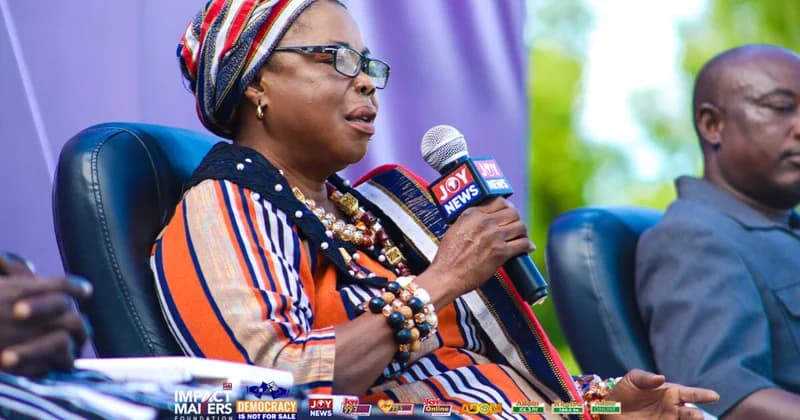
National stakeholders, traditional leaders, and civic organizations have intensified calls to safeguard Ghana’s democratic integrity against the escalating threats of election monetization, corruption, and technological manipulation. At the "Democracy Is Not For Sale" forum in Damongo, Savannah Region, participants warned that the commercialization of the electoral process is eroding the quality of political representation. Speakers emphasized that the prevalence of vote-buying and financial inducements poses a direct threat to national development, urging a shift in political culture toward accountability and merit-based leadership.
During the Damongo forum, Alijata Haruna, the Queen Mother of the Damongo Traditional Area, highlighted the critical link between poverty and electoral integrity. She noted that economic hardship, high illiteracy rates, and limited employment opportunities drive many women to accept gifts or cash from political actors as a matter of immediate survival. Savannah Regional Minister Salisu Be-Awuribe echoed the need for enhanced public education to empower voters to resist such inducements, while also calling for clearer legal guidelines to distinguish between genuine community generosity and prohibited electoral offenses. Prof. Adams Achanso of the University for Development Studies further cautioned that unchecked spending could lead to the election of unsuitable candidates to Parliament, compromising the country's legislative quality.
Institutional efforts to bolster accountability are simultaneously expanding across other regions. In the Volta Region, Dr. Joseph Whittal of the Commission on Human Rights and Administrative Justice (CHRAJ) recently inaugurated a 16-member Key Accountability Institutions (KAI) Forum. Supported by the EU and GIZ, this forum aims to create robust detection and deterrence systems against corruption and organized crime. Meanwhile, the National Commission for Civic Education (NCCE) has been active in the Lambussie District, engaging women’s groups and traditional leaders on the rule of law to overcome cultural barriers and the fear of victimization that often prevent the reporting of corrupt practices.
Looking toward the future of digital governance and regional peace, Professor Henry Kwasi Prempeh of CDD-Ghana has stressed the importance of protecting elections from AI-driven manipulation and disinformation. At the Third Electoral Integrity Summit, he urged for improved transparency in political financing and stronger civic protections to maintain public trust in technology. Complementing this, Baffour Owusu Bediako, Omanhene of the Domeabra Traditional Area, argued that sustainable peace is inextricably linked to job creation and youth empowerment. Together, these diverse voices suggest that securing Ghana's democracy requires a dual approach: strengthening legal and technological safeguards while aggressively addressing the socio-economic vulnerabilities of the electorate.

