••
Alfred Sakyi inducted as Methodist Church Lay President
•2 min read•1 source
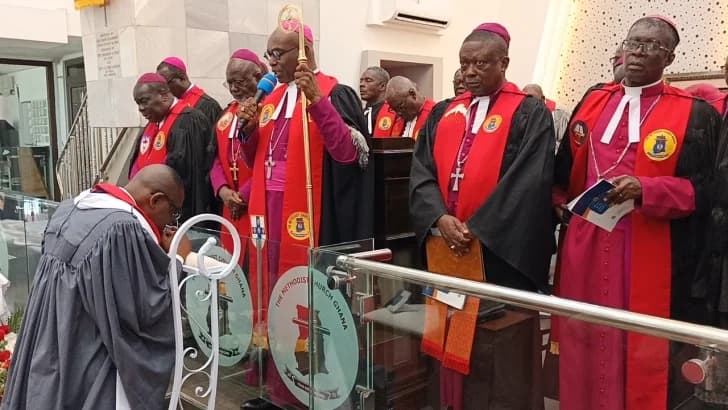
Alfred Sakyi has been formally inducted as the new Lay President of the Methodist Church Ghana, where he has committed to addressing youth unemployment through targeted economic empowerment. The induction ceremony, held at the St Paul Cathedral in Tema, marks the start of Sakyi’s three-year tenure as the highest-ranking lay official within the church. During his inaugural address, he emphasized that supporting the next generation in their business ventures is a critical responsibility for the church in the face of current job scarcity.
As part of his primary agenda, Sakyi announced the rollout of the Methodist Entrepreneurship Development Programme. This initiative is structured to provide essential seed funding for young people who are exploring business opportunities, helping them transition from job seekers to job creators. In addition to youth development, Sakyi’s priorities for his term include fostering spiritual growth across the congregation and implementing strategies to re-engage inactive church members. He called for a spirit of unity and collaboration among the church leadership to achieve these goals.
The Presiding Bishop of the Methodist Church Ghana, Professor Johnson Asamoah-Gyadu, offered guidance during the ceremony, highlighting the importance of integrity and sound leadership. He cautioned the newly inducted Lay President and the wider congregation against allowing friction to develop between the lay and ordained ministries. Professor Asamoah-Gyadu underscored that the strength of the Methodist Church lies in its ability to maintain a harmonious relationship between its clerical and lay arms, ensuring that both work toward the common mission of the church.
Sakyi’s term begins at a pivotal moment as the Methodist Church Ghana seeks to modernize its approach to social intervention and congregation management. By integrating spiritual missions with practical economic initiatives like seed funding for entrepreneurs, the church aims to remain relevant to its younger demographic. The success of Sakyi’s tenure will likely be measured by the effectiveness of these youth-centered programmes and his ability to maintain leadership cohesion throughout the next three years.
