••
Aleksander Ceferin Declines FIFA Presidency Run Amidst Intensifying Leadership Debate
•2 min read•3 sources
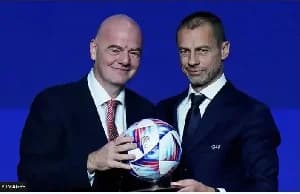
UEFA President Aleksander Ceferin has officially declared that he will not enter the race for the FIFA presidency, ending months of speculation regarding a potential challenge to the incumbent, Gianni Infantino. Despite being a prominent and vocal critic of Infantino’s administration, Ceferin confirmed that he will not seek to lead the global football governing body when the next election cycle concludes. However, the UEFA chief suggested that his personal decision does not guarantee a clear path for the current leadership, noting that Infantino may still face significant opposition during the FIFA Congress scheduled for March 2027.
The leadership of FIFA has come under renewed scrutiny following a controversial and ultimately failed proposal to involve private investors in the World Cup and other major tournaments. This "selloff" initiative has sparked a wave of dissatisfaction among football's elite, including high-profile former players. Premier League winners Emmanuel Petit and Mikael Silvestre, alongside former French international Olivier Dacourt, have been among the most vocal in demanding a change at the top. These former stars expressed deep concerns that the current administration is struggling to separate personal and commercial interests from the actual needs and integrity of the sport.
In contrast to the growing calls for resignation, African football legend Samuel Eto’o has stepped forward to defend Gianni Infantino. Eto’o urged the football community to maintain its support for the embattled president, asserting that Infantino "hasn’t done anything wrong." He dismissed the calls for resignation stemming from the failed private investment plan, framing the backlash as disproportionate. This divide highlights a significant rift within the football world between those seeking a total overhaul of the governing body's commercial strategy and those who remain loyal to the incumbent's vision for the game's expansion.
As the dust settles on Ceferin's withdrawal, the focus now shifts toward the March 2027 FIFA Congress. While the UEFA President has removed himself from the equation, his prediction of a potential challenge indicates that internal tensions remain high. The coming months are expected to see continued debate over the commercialization of the World Cup and whether the current leadership can reconcile the demands of private capital with the traditional values of international football. Whether a new challenger will emerge from the ranks of global football remains the central question facing the organization.

