••
Alan Kyerematen Champions Centrist Unity as NDC and NPP Face Internal and External Pressures
•3 min read•32 sources
Alan John Kwadwo Kyerematen, leader of the newly formed United Party (UP), has positioned his movement as a pragmatic centrist alternative to Ghana’s long-standing political duopoly. In recent statements, Kyerematen acknowledged the progress made by President John Mahama’s administration in stabilizing the national economy but cautioned that the ultimate test remains the long-term sustainability of these gains. Describing the United Party as a vehicle for pragmatism and balance, Kyerematen emphasized that his platform seeks to unite Ghanaians beyond the traditional divides of the New Patriotic Party (NPP) and the National Democratic Congress (NDC), prioritizing a "Ghana project" that transcends ethnicity, religion, and age. This push for a third-force alternative is further bolstered by the launch of The Base Movement (TBM) in Accra, which recently unveiled a new online radio station and website aimed at challenging the dominance of the two major parties ahead of the 2027 elections.
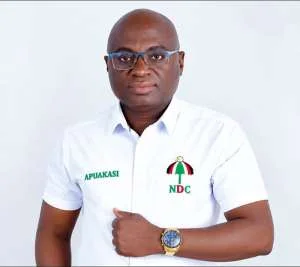
Within the ruling National Democratic Congress, internal competition and public fallout are creating a complex political environment. Dr. Akwasi Oppong-Fosu, a contender for the NDC National Chairmanship, has called for a shift toward "substance over visibility," criticizing the trend of politicians seeking popularity without offering meaningful leadership. Simultaneously, the party faces a high-profile public distancing from musician MzBel, who expressed deep regret over her past support for the NDC. She revealed that her political affiliation led to significant professional losses, including cancelled performances and threats, and declared she no longer maintains allegiance to any political party. At the regional level, the NDC is seeing intensified competition, particularly in the Upper East where former Bongo DCE Alexis Adugdaa Ayamdor and Pallas Apuakasi have both declared bids for the Regional Secretary position, emphasizing grassroots mobilization.
On the opposition side, the New Patriotic Party continues to strategize for the future while managing internal friction. Ashanti Regional Chairman Odeneho Kwaku Appiah (COKA) has pledged that a future NPP government under Dr. Mahamudu Bawumia would prioritize youth empowerment and job creation, while expressing concern over what he described as a current erosion of free speech. However, the party is also dealing with organizational disputes, as the NPP Russia Branch recently issued a statement disassociating itself from Dr. Abongo Mashood and his "Lions of NPP" group, citing leadership misrepresentation. These partisan maneuvers are occurring against a backdrop of increasing social pressure, as the Ghana Evangelical Missions Association (GEMA) and other religious leaders urge the government to intensify the fight against illegal mining (galamsey) and address rising corruption despite the country's high Christian population.
Security and governance also remain at the forefront of national discourse following a violent incident in the Savannah Region. Inspector-General of Police Christian Tetteh Yohuno and Savannah Regional Minister Salisu Be-Awuribe recently visited Gbindabuor to assess the security situation following the tragic lynching of General Constable Redeemer Owusu. While the IGP announced a posthumous promotion for the officer and confirmed that 36 suspects are assisting with investigations, the incident has sparked renewed calls for an end to mob justice and improved protection for security personnel. As the nation navigates these security challenges and the looming 2026 World Cup visa scandal allegations—which Parliament's Youth and Sports Committee Chairman Ernest Norgbey stated require formal evidence before investigation—the political landscape continues to shift toward a focus on accountability, substance, and the potential for a more unified national vision.
Related topic
NDC (National Democratic Congress): Latest News →

