••
Akyerensua-Hwidiem road hazards remain unresolved after four months
•2 min read•1 source
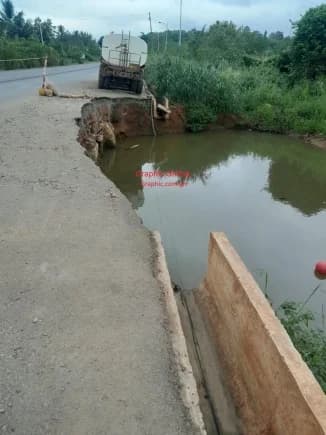
The Akyerensua-Hwidiem stretch of the R63 highway in the Ahafo Region remains a significant safety threat to motorists four months after structural hazards were first identified. Despite an initial warning published in May 2026, follow-up reports indicate that the dangerous conditions persist, posing a high risk of accidents on this vital transport corridor. The situation has sparked renewed calls for the road authorities to move beyond temporary fixes and implement a permanent solution to safeguard the public.
A follow-up investigation conducted by citizen journalist Kwame Agyapong, whose initial report brought the issue to national attention, revealed that the hazards have worsened due to the deterioration of safety measures. Although authorities had previously installed temporary caution signals and barriers to warn drivers of the construction-related defects, these signals have since been destroyed or removed. Without these crucial warnings, the structural flaws on the R63 highway are often invisible to approaching drivers, especially at night or during adverse weather conditions.
The failure to resolve these safety issues over a four-month period has raised concerns regarding the oversight of road construction projects in the region. Local residents and frequent users of the highway have expressed frustration over what they perceive as negligence, noting that the destruction of temporary signals was a predictable outcome that required more durable interventions. The current state of the Akyerensua-Hwidiem stretch serves as a stark reminder of the dangers posed by unfinished or poorly managed infrastructure projects.
As the R63 is a key route for both commercial and private transport, the continued presence of these hazards has broader implications for regional road safety. Stakeholders are urging the Ministry of Roads and Highways and the Ghana Highway Authority to prioritize the completion of the necessary repairs. Until a permanent structural fix is implemented and robust safety protocols are restored, the stretch remains a high-risk zone for the traveling public.
