••
Health Minister Kwabena Mintah Akandoh Urges Efficiency as GH¢1.5 Billion is Allocated for Free Primary Health Care
•3 min read•2 sources
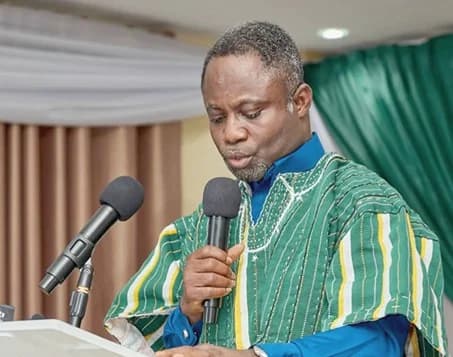
The Minister of Health, Kwabena Mintah Akandoh, has called for the prudent management of resources dedicated to the Free Primary Health Care (FPHC) program, warning that the initiative's success depends on the efficiency of its implementers. Speaking at the 33rd Annual General Conference of the District Directors of Health Services in Bolgatanga, the Minister revealed that the government has allocated GH¢1.5 billion from domestic resources to fund the initiative. He cautioned health directors that mismanagement could jeopardize the policy, emphasizing that this investment is a critical step toward ensuring accessible healthcare for all Ghanaians.
To support the rollout of the FPHC, the Ministry has commenced the distribution of over 25,500 pieces of medical equipment, alongside essential logistics such as motorbikes and tricycles designed to enhance service delivery in remote areas. Minister Akandoh noted that district directors play a pivotal role in the actualization of healthcare policies on the ground. He stressed that the FPHC program is not merely about clinical treatment but prioritizes prevention and health promotion as key pillars for improving national health outcomes.
Complementing the national policy drive, the National Health Insurance Authority (NHIA) has intensified its public education efforts, specifically within the Western North Region. The authority recently conducted refresher training for District Managers and Public Relations Officers (PROs) across eight districts to ensure they are equipped to communicate the nuances of the FPHC and the new One-Time Attendance Code (OTAC) system. Acting Regional Director Frank Duku emphasized that clear, accurate communication is essential for public trust and the effective utilization of the National Health Insurance Scheme (NHIS).
Regional leadership within the NHIA has highlighted the necessity of aligning operations with public relations to streamline service delivery. Dr. Isaac Damptey, the Regional Operations Manager, noted that bridging the gap between technical operations and public outreach will help resolve bottlenecks in the field. By utilizing diverse communication platforms, the NHIA aims to ensure that residents in the Western North Region and beyond are fully aware of their benefits under the expanded health coverage frameworks.
As the government pushes forward with these multi-faceted health reforms, officials have echoed the need for transparency and innovative resource management. The integration of high-level policy funding with grassroots communication strategies suggests a comprehensive approach to achieving universal health coverage. The success of these initiatives will ultimately be measured by the quality of service provided at the district level and the ability of health officials to maintain accountability in the face of increased domestic expenditure.

