••
Allied Health Professions Council inducts 15,000 graduates
•2 min read•1 source
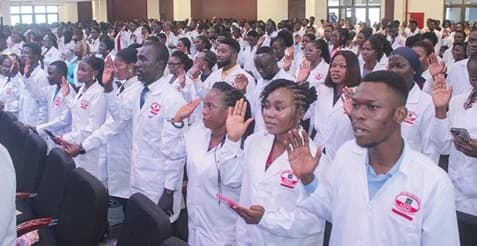
The Allied Health Professions Council (AHPC) has formally inducted 15,000 graduates from various health disciplines into the professional fraternity during ceremonies held across Accra, Kumasi, and Tamale. This significant addition to the healthcare workforce includes professionals from fields such as medical laboratory science, dietetics, and disease control. These inductees are expected to play a pivotal role in strengthening Ghana's healthcare system and supporting the national agenda to achieve Universal Health Coverage. Speaking at the induction, the AHPC Registrar, Professor Shirazu Issahaku, highlighted the theme of the event, "Setting the Standard: Regulating Service, Safety and Excellence across Universal Health Coverage." He emphasized that the induction is a preliminary step towards full professional recognition. To qualify for a permanent license to practice, all 15,000 graduates are required to complete a mandatory one-year supervised clinical placement. This internship period is designed to ensure that the new professionals transition from academic theory to practical, hands-on clinical service while strictly adhering to safety and regulatory protocols. Professor Samuel Antwi-Baffour, the guest speaker, challenged the new inductees to accept postings in rural and underserved areas to ensure that healthcare services reach every corner of the country. He noted that the success of universal health coverage depends on the equitable distribution of skilled personnel. He also urged the graduates to uphold the highest ethical standards, emphasizing that compassion and integrity are as vital as technical expertise in the medical profession. The induction encompasses a wide range of specialties, including disease control officers and diagnostic technicians, who are essential for effective clinical and public health delivery. As these professionals begin their supervised clinical year, the AHPC reaffirmed its commitment to rigorous regulation to ensure the public receives quality and safe healthcare. This massive induction is viewed as a strategic move to close personnel gaps and enhance the delivery of specialized health services nationwide.