••
Minister Agbodza Unveils Sustainability Strategy for US$10 Billion Big Push Infrastructure Amidst Major Energy and Governance Reforms
•3 min read•28 sources
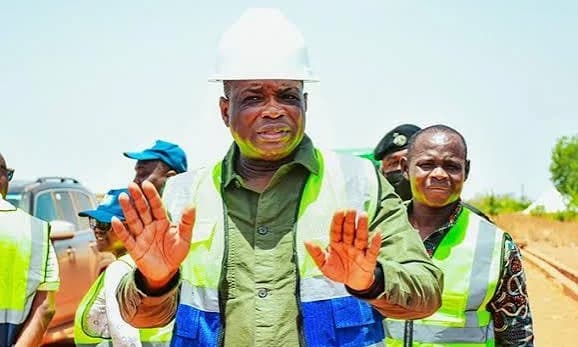
The Minister for Roads and Highways, Governs Kwame Agbodza, has announced a strategic shift in Ghana’s infrastructure management to ensure the long-term sustainability of the US$10 billion ‘Big Push’ road program. Addressing concerns raised by the World Bank regarding future maintenance liabilities, Agbodza emphasized moving from a cycle of ‘build-deteriorate-rehabilitate’ to a ‘build-maintain-preserve’ approach. To support this, the government is operationalizing the Road Maintenance Trust Fund and reintroducing electronic road and bridge tolls. These measures aim to address the historical underfunding that has left significant portions of the national road network in poor condition. Concurrently, the Ministry of Works and Housing is set to launch the Kaneshie drainage improvement project on September 7, 2026, as part of the Greater Accra Resilient and Integrated Development (GARID) initiative to mitigate perennial flooding.
In the energy sector, the Minister for Energy and Green Transition, Dr. John Abdulai Jinapor, has launched a major electrification project under the Rural Electrification Acceleration and Urban Intensification Initiative (REIP). This project will extend electricity to 206 communities across 18 districts in the Volta Region, aiming to catalyze socio-economic development and job creation. Further strengthening the national grid, the government is procuring Battery Energy Storage Systems (BESS) to improve power supply reliability and facilitate the integration of renewable energy sources. This transition is being supported by calls for increased public-private partnerships to mobilize investment for a sustainable energy future, as highlighted during the 2026 Energy Sustainability Leadership Conference.
Local governance and sectoral reforms are also advancing, with the Driver and Vehicle Licensing Authority (DVLA) announcing plans to manufacture and emboss number plates in-house by late 2026 to enhance security and eliminate counterfeit plates. In the Ho Municipality, MCE Stephen Adom has outlined plans for new lorry stations and the operationalization of the Sokode Abattoir to alleviate urban congestion and improve public health standards. However, some regions face challenges; in Tsumkpo, unauthorized sand-winning has destroyed over 50 acres of farmland, prompting calls for stricter regulatory enforcement. Meanwhile, in the education sector, Professor Kwadwo Appiagyei-Atua has advocated for a redesign of student politics to reduce the influence of the NPP and NDC on university campuses, promoting more independent student activism.
Institutional and religious leaders are also navigating new roles within the current administration. President John Mahama recently hosted the new executive presbytery of the Assemblies of God, Ghana, where he was commended for his consistent support of the church. In a significant cultural shift, the Presbyterian Church of Ghana has revised its constitution to allow members to serve in traditional leadership roles, provided they renounce rituals conflicting with Christian doctrine. As the government grapples with project delays—such as the 17-kilometre Tema-Dawhenya road rehabilitation currently at 23% completion—Minister Agbodza has urged contractors to increase manpower to meet development goals and ease the public's transportation burdens.
Related topic
NDC (National Democratic Congress): Latest News →

