••
Over 20 African Nations Fall Short of WHO Air Quality Guidelines in New AfriCAN Report
•3 min read•1 source
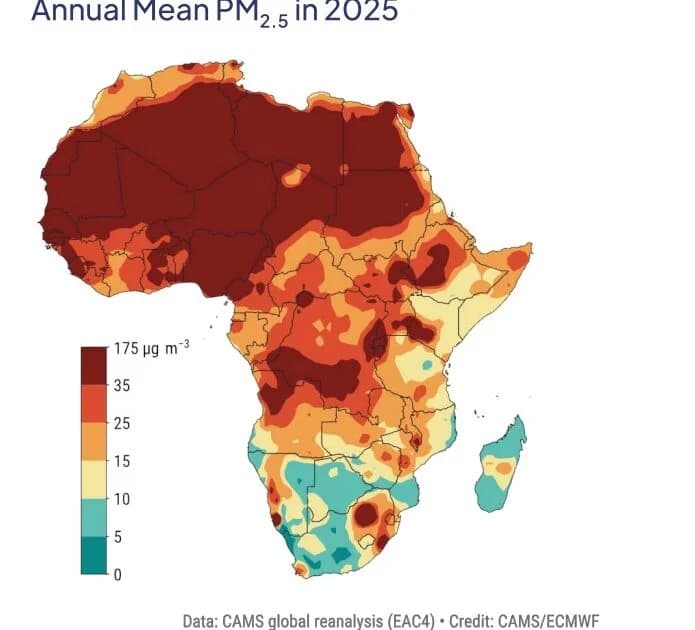
In observance of the International Day of Clean Air for Blue Skies on September 7, a sobering new report has revealed that more than 20 African countries failed to meet the World Health Organization’s (WHO) air pollution guidelines in 2025. The Africa Air Quality Brief, produced through a collaboration between the Africa Clean Air Network and the Copernicus Atmosphere Monitoring Service, highlights a deepening environmental crisis across the continent. While the day is intended to promote the importance of "Blue Skies," the data suggests that for a significant portion of Africa’s population, atmospheric quality remains a severe threat to public health and economic stability.
The report identifies West Africa as a primary hotspot for poor air quality, with Nigeria, Niger, and Senegal recording some of the highest pollution levels on the continent. Experts attribute these findings to a complex mix of human activities—such as industrial emissions and urban transport—and natural phenomena, particularly the seasonal influx of Saharan dust. Dr. Laurence Rouil, an expert involved in the brief, emphasized that the collection of reliable air quality data is no longer just a scientific necessity but a critical foundation for informed policy-making. Without accurate monitoring, governments remain ill-equipped to tackle the specific drivers of pollution in their regions.
The human and economic costs of this failure are staggering. Global estimates linked to the 2025 reporting period suggest that air pollution contributed to between 6.4 million and 8.4 million premature deaths worldwide. Beyond the tragic loss of life, the Africa Air Quality Brief argues that inaction is an economic drain. However, there is a strong case for investment; data indicates that every dollar spent on clean air initiatives could yield substantial economic benefits by reducing healthcare costs and improving workforce productivity. The narrative in the region is slowly shifting from a focus on bleak statistics toward the potential for significant economic returns from environmental stewardship.
Despite the challenges, several African nations are beginning to implement proactive solutions. Ghana, Togo, and South Africa were highlighted for their efforts to improve air quality monitoring infrastructure and establish more stringent environmental standards. These developments signal a transition from mere observation to actionable policy. As the Africa Clean Air Network continues to expand its reach, the goal is to provide more countries with the tools needed to reclaim their air quality, offering hope that future observations of the International Day of Clean Air will reflect significant progress toward meeting international health standards.
Live rates
Dollar to cedi rate →