••
Afram Plains Irrigation Projects Reach Advanced Stages as Funding Delays Stall Ekyeamamfrom Facility
•2 min read•2 sources
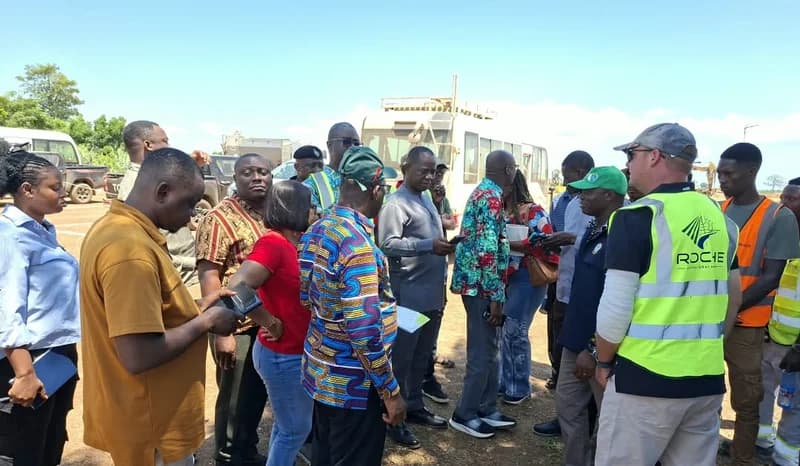
Two major irrigation projects in the Afram Plains are nearing completion, signaling a potential shift toward year-round commercial farming in the region. The Konadu and Ekyeamamfrom projects, both over 90% complete, are designed to modernize agricultural production and reduce the area's reliance on seasonal rainfall. However, while the Konadu facility is preparing for commissioning within the next month, its counterpart at Ekyeamamfrom faces an indefinite delay due to outstanding government payments, highlighting the bureaucratic hurdles facing Ghana’s agricultural infrastructure development. The Konadu Irrigation Project, a central component of the Afram Plains Economic Enclave Irrigation Project (APEEIP), has reached 96% completion. According to Project Manager Josh Roche, phase one of the facility is expected to be operational in just 30 days. Spanning approximately 900 hectares, the system utilizes a combination of centre-pivot and gravity irrigation to support the production of cereals and vegetables. The project is designed around an anchor-tenant and outgrower model, which aims to integrate smallholder farmers with commercial operators to ensure stable market access and modernized farming techniques. In contrast, the Ekyeamamfrom-Pivot Irrigation Project has hit a standstill despite being 90% finished. Project Manager Anthony Abubakar revealed during a site visit by Parliament’s Committee on Food, Agriculture, and Cocoa Affairs that three payment certificates submitted nearly a year ago remain unpaid. Abubakar emphasized that the remaining work is minimal but cannot proceed without the release of these funds. Once completed, the 350-acre facility is expected to transform local agriculture by enabling the cultivation of high-value crops like tomatoes and potatoes. The successful completion of both projects is seen as vital for the economic development of the Afram Plains, a region often referred to as Ghana's breadbasket. While the imminent commissioning of the Konadu facility provides a blueprint for agricultural expansion, the situation at Ekyeamamfrom serves as a reminder of how financial bottlenecks can hamper critical infrastructure. Local farmers remain optimistic, yet the realization of year-round production across the district hinges on the government’s ability to settle its arrears and support the final phases of these transformative irrigation schemes.
