••
Accra motorists demand urgent repairs for hazardous potholes on major roads
•2 min read•1 source
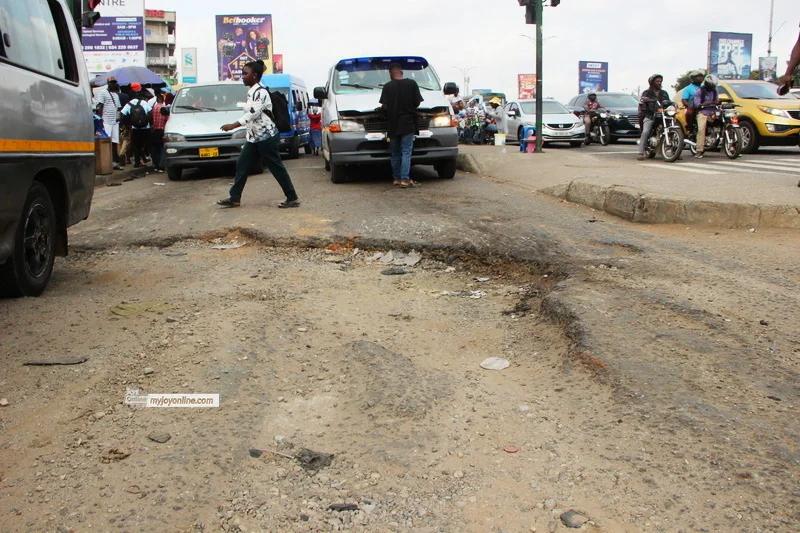
Motorists in Accra are sounding the alarm over the deteriorating state of major road networks, which have become riddled with severe and dangerous potholes. These hazardous conditions are not only endangering the lives of commuters but are also causing significant mechanical damage to vehicles and worsening already heavy traffic congestion across the nation's capital. Drivers have reported that the presence of these craters has made daily commuting increasingly perilous, as they are often forced to choose between hitting a deep hole or swerving into oncoming traffic.
The degradation is particularly visible at critical junctions and high-traffic corridors, including the Abeka Lapaz interchange, the UPSA road, East Legon, and Sakaman Junction. In these areas, the potholes often appear suddenly or expand rapidly after rainfall, catching drivers off guard. Such maneuvers to avoid the damaged sections have created a high risk of multi-vehicle collisions and have turned daily commutes into a stressful navigation of what many road users describe as a "minefield" of broken asphalt and neglected infrastructure.
Frustrated road users are directing their calls for intervention toward the Ghana Highway Authority (GHA), the Department of Urban Roads (DUR), and the Accra Metropolitan Assembly (AMA). They contend that despite the visibility of the decay and the clear threat to public safety, there has been a notable lack of maintenance activity or even temporary patching. Commercial drivers, in particular, have expressed concern over the rising costs of spare parts and frequent repairs to suspension systems necessitated by the constant impact of poor road surfaces.
As frustrations mount, there is an urgent plea for the relevant authorities to initiate a comprehensive road rehabilitation program to ensure the safety of all commuters. Beyond the immediate physical risks, the current state of the roads is undermining economic productivity by increasing travel times and fueling higher transport costs for goods and services. Without swift action to rectify these hazardous conditions, motorists fear that the situation will only deteriorate further, leading to avoidable accidents and a continued decline in the quality of life for those living and working in the Greater Accra Region.

