••
Government Deploys Military and Engineering Interventions to Tackle Accra Flooding as Relief Efforts Reach Alajo
•3 min read•4 sources
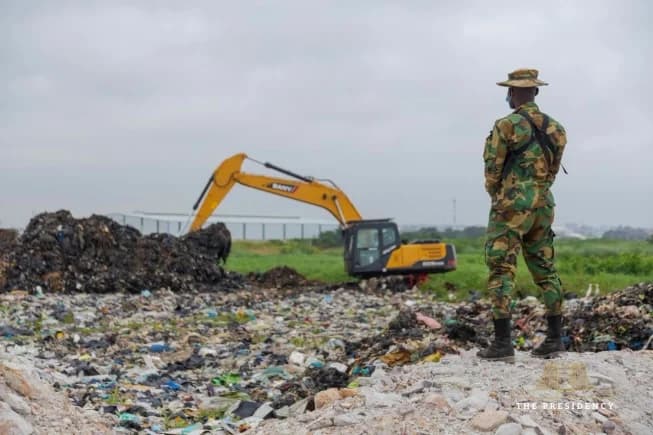
In a coordinated effort to address the perennial flooding that has plagued the national capital, the government has launched significant engineering and reclamation projects across several flood-prone zones in Accra. These interventions, primarily targeting the Lafa water retention basin and the Hansonic Junction, come in the wake of devastating floods in June 2026. The 48 Engineer Regiment of the Ghana Armed Forces has been deployed to lead the restoration of critical drainage infrastructure, while international aid organizations provide essential relief to displaced families in affected communities like Alajo.
The 48 Engineer Regiment has commenced a massive operation to reclaim the Lafa water retention basin, which serves the Mallam, Weija, and Dansoman areas. Over years of neglect, the basin had become severely compromised by illegal encroachment and the dumping of compacted waste, significantly reducing its capacity to hold runoff during torrential rains. Utilizing heavy machinery, the military unit is dredging the basin, evacuating silt, and demolishing illegal structures that obstruct natural water flow. This effort, coordinated by the Post-Flood Mitigation Task Force, is expected to take several months and aims to provide a long-term safeguard for residents of the Blue Lagoon and surrounding neighborhoods.
Simultaneously, construction has begun on a major 5.2-meter underground storm drain at the Hansonic Junction along the Dr. Busia Highway. This project seeks to resolve drainage issues that have persisted for over 15 years, according to Municipal Chief Executive Adamu Musah Kalamu. Maintenance Engineer Kwaku Tsegah noted that the existing drainage system, which dates back to 1985, had become woefully inadequate due to heavy siltation and refuse accumulation. The new storm drain, scheduled for completion in four months, will connect to the drainage network near Accra Academy, providing a permanent solution for local businesses and commuters who have long suffered from seasonal disruptions.
Complementing these infrastructure projects, the humanitarian organization DirectAid has initiated a GH¢2 million relief program to support approximately 1,500 families affected by the June 2026 floods. In Alajo, Country Director Sami Henedak Ahmed oversaw the distribution of food packages, mattresses, and household essentials funded by donations from Kuwait. Beneficiaries expressed profound gratitude for the assistance as they continue the difficult process of recovering their livelihoods and rebuilding their homes following the recent disasters.
While these government and humanitarian efforts provide immediate relief and structural improvements, authorities are emphasizing the necessity of public cooperation to ensure the sustainability of these projects. Officials have issued a stern call to residents to cease illegal dumping in drains and basins, warning that the heavy investment in infrastructure will only be effective if the community helps maintain clear waterways. As work continues across the capital, the focus remains on building a more resilient urban environment capable of withstanding the increasing intensity of seasonal rains.

