••
Commuters and Transport Operators Lament Severe Congestion at Accra Central Market
•2 min read•1 source
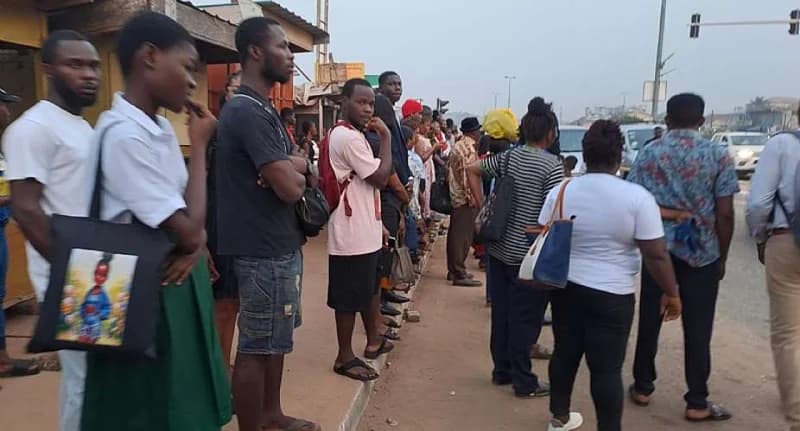
Commuters and transport operators at the Accra Central Market are facing severe delays as heavy traffic congestion and the encroachment of traders onto public roads cripple movement during peak hours. Major transit hubs, including CMB, Tudu, and Rawlings Park, have seen a significant surge in both vehicular and pedestrian traffic, making navigation increasingly difficult for commercial drivers and passengers alike. The situation has reached a critical point, with the daily commute becoming a grueling experience for thousands who rely on these central transport points. The primary driver of this gridlock is the persistent takeover of roads and pavements by hawkers and traders. Observations in the area reveal that trading activities have spilled over from designated market spaces onto the asphalt, leaving little room for vehicles to maneuver. This encroachment not only narrows the driving lanes but also forces pedestrians into the paths of oncoming traffic, further slowing down the flow of movement. As traders set up stalls on sidewalks, the infrastructure meant to support urban mobility is being repurposed for commerce, leading to a breakdown in orderly transit. For commercial transport operators, the congestion translates into significantly longer turnaround times. Drivers who would normally complete several trips in a morning shift find themselves stuck in traffic for extended periods, reducing their daily earnings and efficiency. Consequently, passengers are left waiting at terminals for hours as fewer vehicles are able to return to the stations to pick up new travelers. Commuters have expressed growing frustration, calling on city authorities and traffic management teams to intervene and restore order to the market's transport network. Addressing the congestion at Accra Central Market will require a multi-faceted approach involving stricter enforcement of bylaws against street hawking and better traffic management strategies. Without immediate intervention, the bottlenecks at Tudu and Rawlings Park are likely to worsen, impacting the broader productivity of the capital city. As the hub remains a vital artery for trade and transit in Ghana, stakeholders are urging the Accra Metropolitan Assembly and the Motor Traffic and Transport Department (MTTD) to implement sustainable solutions that balance the needs of traders with the necessity of free-flowing transport.