••
Abuakwa South communities receive GH₵550,000 digital training centre
•2 min read•1 source
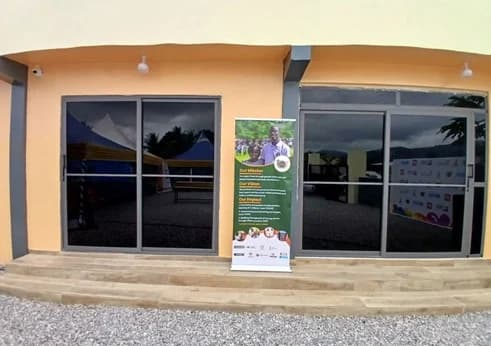
Abuakwa South communities in the Eastern Region have gained a significant boost in educational resources following the inauguration of a new GH₵550,000 digital learning centre at Habitat Obronikrom. The facility, established by Care for Society Network International (CfSNI), is designed to provide schoolchildren and local residents with access to modern technology and essential digital skills. By focusing on underserved rural populations, the initiative seeks to bridge the persistent digital divide that often leaves rural students at a disadvantage compared to their urban counterparts.
The project was realized through a collaborative effort involving several key partners, including the STAR Ghana Foundation and the West Africa Civil Society Institute (WACSI). Financial and technical support for the centre was provided by Comic Relief and the United Kingdom’s Foreign Commonwealth and Development Office (FCDO). The centre is specifically equipped to offer comprehensive training in various high-tech fields, including digital literacy, computer coding, Science, Technology, Engineering, and Mathematics (STEM), as well as robotics and practical innovation.
Anita Ampofoa Amoako-Gyimah, the Founder of CfSNI, highlighted the transformative potential of the facility during the launch ceremony. She emphasized that providing rural children with early exposure to technology is critical for fostering creativity and developing complex problem-solving skills. According to Amoako-Gyimah, the centre is not just a building but a hub for future-focused learning that will empower children to compete in a global economy by providing them with essential skills for future careers.
Community leaders and local representatives expressed hope for the centre’s positive impact on future generations, noting that such infrastructure is vital for the development of the area. They encouraged students and the wider community to take full advantage of the resources provided to enhance their technical proficiency. As the centre begins its operations, it serves as a model for how non-governmental partnerships can support the national goal of increasing digital inclusion across Ghana’s rural landscape.