••
Foreign Minister Ablakwa Inks Historic Visa Deal with Russia as Bawumia Outlines Development Vision with Japan and Local Engineers
•3 min read•7 sources
Ghana is significantly expanding its international footprint and domestic development agenda through a series of high-level diplomatic and professional engagements. Foreign Minister Samuel Okudzeto Ablakwa recently concluded a historic three-day official visit to Moscow, where he signed a visa waiver agreement for diplomatic and service passport holders—the first such arrangement since formal ties began in 1958. During the visit, the Minister also secured a doubling of Russian scholarships for Ghanaian students, increasing the annual quota from 120 to 240. These scholarships will prioritize critical fields such as artificial intelligence, nuclear energy, petroleum sciences, and pharmaceuticals. Minister Ablakwa further used the platform to urge for an Africa-led strategy to combat terrorism in the Sahel, emphasizing that while international partners like Russia are essential for regional stability, the solutions must be pioneered by African nations. This push for regional collaboration aligns with President John Mahama’s broader initiative to restore dialogue with Sahelian neighbors, as seen in his recent outreach to regional leaders during his inauguration.
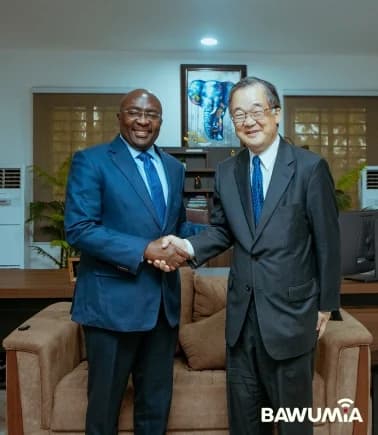
On the domestic front, the leader of the opposition and New Patriotic Party (NPP) flagbearer for the 2028 elections, Dr. Mahamudu Bawumia, has intensified his consultative efforts to address Ghana's long-term development challenges. The former Vice President held a strategic meeting with the Japanese Ambassador to Ghana, Hiroshi Yoshimoto, and representatives from the Japan International Cooperation Agency (JICA). Their discussions centered on deepening cooperation in digitalization, fintech, and artificial intelligence, while also exploring Japanese support for flood control and environmental strategies to combat illegal mining, or galamsey. Dr. Bawumia characterized the engagement as a productive opportunity to leverage international expertise for Ghana’s digital and environmental transformation.
In addition to his diplomatic consultations, Dr. Bawumia met with the leadership of the Ghana Institution of Engineering (GhIE) to seek professional input on infrastructure and governance. These talks focused on resolving bottlenecks in urban transport, enhancing public procurement processes, and ensuring that technical expertise is better integrated into national policymaking. Dr. Bawumia emphasized that the involvement of engineers and scientists is non-negotiable for sustainable national development, signaling his intent to build a policy platform for 2028 that is rooted in professional and technical rigor. These meetings reflect a strategic effort by the NPP leadership to maintain political relevance by offering concrete solutions to structural national issues.
Adding to the atmosphere of political engagement, the European Union (EU) has underscored the importance of cross-party collaboration to ensure Ghana’s long-term democratic stability. Jonas Claes, Charge d’Affaires of the EU Delegation to Ghana, recently advocated for stronger ties between the youth wings of the National Democratic Congress (NDC) and the NPP. Speaking at the conclusion of the Women and Youth Democratic Engagement (WYDE) project, Claes noted that fostering political tolerance among young leaders is essential for the future of Parliament. By providing training in parliamentary drafting and debate, the project aims to build a culture where dialogue transcends partisan divides. Together, these diplomatic, technical, and cross-party initiatives paint a picture of a nation actively refining its security, education, and political frameworks for the years ahead.
Related topic
NDC (National Democratic Congress): Latest News →

