••
Samuel Okudzeto Ablakwa confirms Ghana will apply for BRICS membership
•2 min read•1 source
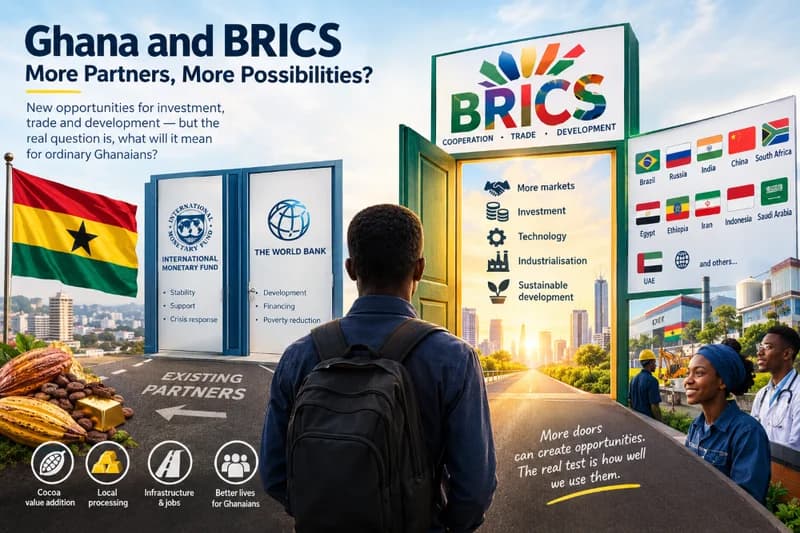
Foreign Affairs Minister Samuel Okudzeto Ablakwa has confirmed Ghana's intention to apply for membership in the BRICS collective, marking a significant shift in the nation's economic diplomacy. This decision is aimed at diversifying Ghana's international partnerships and reducing its historical reliance on traditional Western-led financial institutions such as the International Monetary Fund (IMF) and the World Bank. By seeking to join the bloc—currently comprising Brazil, Russia, India, China, and South Africa—the government hopes to align itself with emerging global economies to secure more varied avenues for national development.
The move is expected to open new doors for investment, technological exchange, and infrastructure development. A key component of this strategy is gaining access to the New Development Bank (NDB), which provides alternative financing for major projects. Minister Ablakwa emphasized that joining BRICS will allow Ghana to better leverage its natural resources by enhancing local processing capabilities and industrial value chains. This approach aligns with the government’s broader goal of moving away from a raw material export economy toward a more industrialized and self-sustaining model.
Despite the potential benefits, the Minister clarified that BRICS membership is not an automatic solution to all economic hurdles. Ghana will be required to meet specific criteria to fully engage with the New Development Bank and other bloc initiatives. Furthermore, the application does not signify a break from existing global financial frameworks; the government intends to maintain its constructive relationships with the IMF and the World Bank. The ultimate success of this transition will depend on Ghana’s ability to effectively use these new partnerships to stimulate job creation, improve living standards, and drive long-term economic stability.