Anansi News
HomeBriefsAsk GhanaTopicsTools
•
•

Stay Informed

Get AI-curated news briefs from Ghana delivered to your inbox every morning. Free forever, no spam.

Explore

  • Home
  • Briefs
  • About

Categories

  • Politics
  • Business
  • Sports
  • Entertainment
  • Africa

Features

  • Analysis
  • Cedi Rates
  • Dollar to Cedi
  • Ghana Gold Price
  • BoG Policy Rate

Topics

  • Armed Forces Recruitment
  • WAEC Results & News
  • Nana Ama McBrown
  • NDC News
  • All Topics

Legal

  • Privacy Policy
  • Terms of Service
Anansi News© 2026. All rights reserved.
Made withfor Ghana
politics

Security Experts and Officials Clash Over Effectiveness of Ghana's Vigilantism Act Amid Resurgence Concerns

Yesterday•3 min read•7 sources
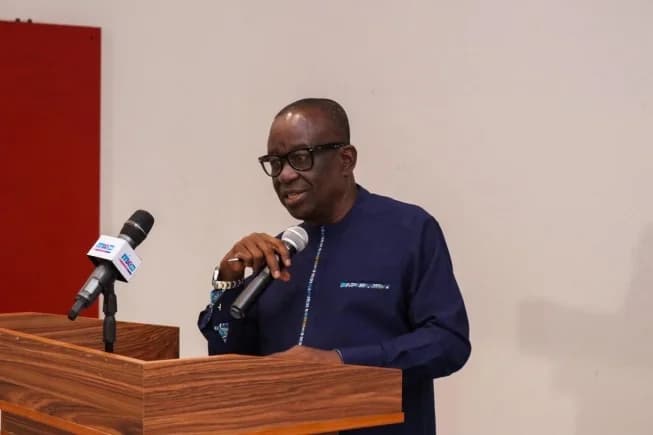
Cut off the demand: Kan-Dapaah urges political parties to end appetite for vigilante services 
  1. Home
  2. /Politics
  3. /Security Experts and Officials Clash Over Effectiveness of Ghana's Vigilantism Act Amid Resurgence Concerns

The National Security Coordinator, COP Razak Abdul-Osman, has issued a stern warning regarding the resurgence of political vigilante groups in Ghana, noting that these organizations are increasingly operating in disguised forms. Speaking at a National Policy Dialogue on the Vigilantism and Related Offences Act, 2019 (Act 999), Abdul-Osman revealed that intelligence suggests disbanded groups are regrouping through social media and secretive operations under the guise of internal party security. This trend persists despite the legal framework designed to dismantle such groups, prompting calls for collective vigilance and more robust enforcement to protect Ghana's democratic stability and national security.

Former Minister for National Security Albert Kan-Dapaah provided a different perspective during the dialogue, arguing that legislation alone cannot eliminate political violence. He emphasized that the true solution lies in dismantling the 'appetite' for vigilante services among the political elite. Kan-Dapaah urged political parties to address the internal dynamics that fuel the demand for informal security groups and called for accountability among top-level sponsors. He linked the issue to broader regional threats, suggesting that internal political instability could leave the country vulnerable to the rising tide of extremism and destabilization currently affecting West Africa.

However, the efficacy of Act 999 itself has come under heavy fire from other security veterans. Former National Security Minister Francis Poku and security analyst Col. Festus B. Aboagye have called for the repeal of the Act, labeling it 'unenforceable' and 'irrelevant.' Poku argued that the state has failed to adequately enforce existing laws and that Act 999 was largely a formality that did not address the root causes of political violence. Instead of focusing on the Act, Poku proposed expanding private security regulations to better manage community security challenges. This sentiment was echoed by those who observed a lack of significant prosecutions or enforcement actions since the law was enacted several years ago.

In tandem with these security discussions, the Ministry for the Interior is pivoting toward community-based solutions to counter emerging threats. During a workshop in Bolgatanga, Commissioner of Police Maame Yaa Tiwaa Addo-Danquah urged security agencies to prioritize transparency and build deeper trust with civilians. This initiative, supported by the European Union, aims to foster collaboration between law enforcement and local communities to better identify and dismantle criminal syndicates, such as the armed robbery networks recently targeted in the Upper East Region.

While security dominated the national discourse, Parliament also moved forward with executive appointments, unanimously approving the nomination of Dr. Zanetor Agyeman-Rawlings as Minister-designate for Local Government, Chieftaincy, and Religious Affairs. Nominations for the Ministry of Environment, Science, and Technology were also approved. Speaker Alban Bagbin congratulated the new appointees but reminded them of the significant challenge of balancing their legislative duties with their new ministerial responsibilities. These developments underscore a busy period in Ghanaian politics, as the administration seeks to stabilize internal security while advancing its governance agenda.

Our Take

From the Team

Coming Soon

Our team will add key insights, trends, and actionable takeaways to help you stay informed faster.

This story touches markets covered on Anansi Intelligence ↗.

More from politics

Continue exploring similar stories

Kissi Agyebeng, Special Prosecutor
politics|Yesterday

Special Prosecutor Kissi Agyebeng Names "Persons of Interest" in $1m Bribery Case Amid Major Anti-Corruption and Security Reforms

Special Prosecutor Kissi Agyebeng has announced a "rebirth" of the Office of the Special Prosecutor (OSP) following a Supreme Court ruling affirming its constitutional authority. In a high-profile press briefing, Agyebeng identified five individuals, including former Power Minister Dr. Kwabena Donkor, as "persons of interest" in an investigation into the local aspects of a $1 million bribery case involving Kwaku Asante Berko. Berko, a former Managing Director of the Tema Oil Refinery, was recently convicted in the United States for conspiring to bribe Ghanaian officials. While Agyebeng emphasized that being named a person of interest does not imply guilt, the move has drawn sharp criticism from legal representatives like KT Hammond, who called the public identification "unprofessional," and Fuseini Donkor of the National Service Authority, who argued it could jeopardize the investigation. Beyond the AKSA energy scandal, Ghana’s judiciary is managing several other high-stakes political cases. The criminal case against former Finance Minister Ken Ofori-Atta regarding the Strategic Mobilization Ghana Limited (SML) contract has been adjourned to late September 2026 to allow time for the service of summons to officials currently in the U.S. Similarly, the Accra High Court granted a third extension for former officials of the Ghana Infrastructure Investment Fund (GIIF) to file witness statements in the $2 million SkyTrain case. Amid these legal proceedings, Special Prosecutor Agyebeng highlighted the OSP’s recent successes, reporting the recovery of GH"8.5 million and $2 million, and claiming to have saved the state over GH"100 million through loss prevention and asset confiscation. Parallel to anti-corruption efforts, the Ministry of the Interior and the Ghana Police Service are implementing strict new security protocols. Deputy Minister Ebenezer Okletey Terlabi warned vehicle retrofitting companies that converting vehicles into Armoured Bullion Vehicles (ABVs) without permits will result in the revocation of licenses. This follows a surge in armed attacks on cash-in-transit operations between 2021 and 2023. Inspector-General of Police Christian Tetteh Yohuno has also urged motorists to yield to ABVs on the road and announced a three-day suspension of concrete mixer trucks in Accra and Tema to address road safety concerns. In a separate matter of institutional discipline, the police interdicted Deputy Superintendent Alhassan Malaika Jibril following his alleged involvement in the controversial demolition of the Accra Race Course in Borteyman. In the energy and environment sectors, Minister for Energy and Green Transition Dr. Abdulai Jinapor announced drafting legislation to regulate electric vehicle (EV) charging stations. The move aims to prevent unregulated charging points from overwhelming the national grid and causing infrastructure failures like transformer blowouts. Meanwhile, Minister-designate for Environment, Science and Technology Zanetor Agyeman-Rawlings appeared before Parliament’s Appointments Committee, pledging a coordinated, multi-agency strategy to combat illegal mining (galamsey). She emphasized that the Environmental Protection Agency (EPA) and local governance must be integrated to assess and mitigate the environmental damage caused by these operations. On the economic front, Minister of State Dr. Rashid Pelpuo gave the government a "B+" grade for job creation, citing the partial success of the 24-hour economy policy and the registration of over 400 private companies in the initiative. Pelpuo also noted that 90% of planned strikes by organized labor were averted during his tenure through proactive engagement. As the administration continues these reforms, Speaker of Parliament Alban Bagbin has bolstered legislative security by outdooring 74 newly trained parliamentary guards. These developments collectively signal a period of intense regulatory and legal activity as Ghana seeks to strengthen its governance frameworks and public safety standards.

Kalamu Musah Adamu — MCE for Ablekuma North
politics|Yesterday

Minister Ahmed Ibrahim Launches Kaneshie Flood Control Project Amid National Infrastructure Push

The Minister of Works, Housing and Water Resources, Ahmed Ibrahim, has officially assumed office under the administration of President John Mahama, pledging a non-partisan mission to tackle Ghana’s housing deficit and infrastructure challenges. Taking over from Gilbert Kenneth Adjei, who now serves as the Defence Minister, Mr. Ibrahim emphasized that resolving national housing issues requires bipartisan cooperation and a political will that extends beyond electoral cycles. His first major undertaking is the launch of critical drainage improvement works in the Kaneshie enclave, a project scheduled to begin on September 7, 2026, aimed at mitigating the perennial flooding that has long plagued the capital. The Kaneshie project, part of the Greater Accra Resilient and Integrated Development (GARID) initiative, involves constructing a 10-meter-wide double-cell underground stormwater drain to replace existing inadequate systems. This follows a devastating flood in June 2026 that caused significant loss of life and property. To facilitate the construction, sections of the Dr Busia Highway will be closed in phases, with the first phase expected to last until late 2026 and the final completion set for October 2027. This infrastructure push aligns with long-standing calls from Lions Clubs International, whose District Governor Ebo Prah Manson has urged the government to prioritize permanent flood prevention measures, such as clearing blocked watercourses, over temporary disaster relief efforts. While the government advances new projects, current road developments are facing increased scrutiny. The Minister of Roads and Highways, Governs Kwame Agbodza, recently expressed frustration over the slow progress of the 17-kilometre Tema-Roundabout to Dawhenya road rehabilitation. Despite being initiated in 2020, the project remains less than 25% complete, leading the Minister to demand that contractors increase manpower to alleviate public traffic distress. Simultaneously, the Public Utilities Regulatory Commission (PURC) has announced plans to mandate better coordination between road contractors and utility providers to prevent damage to water and power lines, an issue that has frequently disrupted services during the government’s ‘Big Push’ infrastructure programme. At the local level, development efforts are being mirrored by the Ablekuma North Municipal Assembly. Municipal Chief Executive Kalamu Musah Adamu recently detailed a suite of projects including the construction of 300 boreholes, a new clinic, and educational facilities to improve living standards. However, experts suggest that local impact could be enhanced through systemic reform. Professor Joseph Atsu Ayee of the University of Ghana has advocated for a restructuring of the decentralization system to grant local authorities greater autonomy and accountability. These reforms, discussed at a recent Citizen Forum in Accra, seek to address funding constraints and ensure that local governance remains inclusive and resilient through various political transitions.

Roey Gilad, the sraeli Ambassador to Ghana, Liberia and Sierra Leone addressing the press
politics|Yesterday

Israeli Ambassador Urges President Mahama to Pressure Iran Amid Shifting Global Political and Legal Landscapes

In a significant diplomatic move, the Israeli Ambassador to Ghana, Roey Gilad, has called upon President John Mahama to join international efforts in pressuring Iran to cease its destabilizing activities in the Middle East. Speaking at a press conference in Accra, Ambassador Gilad addressed recent criticisms from the Mahama administration regarding Israeli military operations in Gaza, asserting that civilian casualties are collateral damage in defensive actions. Despite these tensions, Gilad emphasized the strengthening of bilateral ties, marked by the reopening of the Ghanaian Embassy in Tel Aviv, even as he noted a decline in domestic Israeli support for a two-state solution following the October 7 attacks. Across the African continent, regional power structures are facing similar volatility. In Tanzania, Emmanuel Nchimbi has been expelled from the ruling Chama Cha Mapinduzi (CCM) party for indiscipline, following his historic resignation as vice-president. Nchimbi, the first VP in Tanzania's history to step down, had publicly advocated for a new constitution, signaling a rift with President Samia Suluhu Hassan; Energy Minister Deogratius Ndejembi has been named as his successor. Meanwhile, in Uganda, a succession battle is intensifying as the President's son and military chief, Muhoozi Kainerugaba, reaffirmed his intent to run for the presidency in 2031, facing a challenge from his brother-in-law, Odrek Rwabwogo. In Southern Africa, Zambian opposition leader Brian Mundubile recently surrendered to police to face treason allegations following a disputed election, amidst concerns over the temporary closure of the nation's judiciary. On the global stage, sports governance and international justice systems are grappling with high-stakes legal proceedings. UEFA has initiated criminal legal action against FIFA and its president, Gianni Infantino, over an abandoned plan to sell stakes in the World Cup to private investors through a subsidiary known as FIFA Forward Enterprise. UEFA alleges that Infantino sought to enrich himself and select investors through a process that lacked independent valuation and proper oversight. Simultaneously, a U.S. military judge has finally set a trial date for Khalid Sheikh Mohammed, the alleged mastermind of the September 11 attacks. The trial is scheduled for June 2028 at Guantanamo Bay, following decades of delays caused by legal disputes over torture evidence and overturned plea agreements. Adding to the global sense of transition, the Trump administration has issued an ultimatum to demolish the Kennedy Center in Washington, D.C., if court-ordered blocks on renovations and the reinstatement of Donald Trump’s name on the building are not lifted. In Europe, the death of convicted war criminal Ratko Mladić, known as the "Butcher of Bosnia," at the age of 84 in a UN prison, marks the end of a dark chapter of the Yugoslav wars. These diverse developments, from diplomatic friction in Accra to criminal proceedings in Switzerland and The Hague, underscore a period of profound restructuring in the international political and legal order.

Abdul-Rashid Pelpuo — Reassigned as Minister of State for Special Initiatives
politics|Yesterday

President Mahama Reshuffles Cabinet and Launches Major Airport Infrastructure Modernization

President John Dramani Mahama has initiated a strategic realignment of his administration, announcing an immediate cabinet reshuffle alongside a major infrastructure drive aimed at modernizing Ghana's aviation sector. In the latest government changes, Dr. Abdul-Rashid Pelpuo has been reassigned from the Ministry of Labour, Employment, and Job Creation to the Special Initiatives portfolio. He is succeeded by Emmanuel Kwadwo Agyekum, who previously held the Special Initiatives role. Furthermore, Ernest Brogya Genfi, the former Deputy Minister for Defence, has been appointed as a Presidential Advisor on National Resilience and Emergency Preparedness. Genfi expressed his profound gratitude for the new role, pledging loyalty to the President's vision after serving as Deputy Minister following the tragic loss of his predecessor. Simultaneously, President Mahama has broken ground on a transformative Multi-Tiered, Multi-Purpose Car Park and Airport Hotels Complex at the Accra International Airport. The project, slated for completion within 24 months, will feature a seven-storey car park with over 2,000 bays, two hotels, a shopping mall, and a sky lounge. This initiative is designed to accommodate the rapid growth in air traffic, which has surged from 1.8 million passengers in 2022 to a projected 2.5 million by 2025. During the sod-cutting ceremony, the President emphasized that the project is being executed without direct government funding, highlighting the efficiency of the Ghana Airports Company Limited (GACL) and its partners in enhancing Ghana's position as a regional aviation hub. Beyond infrastructure, the President is reinforcing national governance through significant legislative and disciplinary measures. He has formally assented to 10 new Bills, including the Customs Bill, the Community Service Bill—which introduces non-custodial sentencing for non-violent offenders—and the Tribunals Bill. These laws are intended to modernize public administration, strengthen maritime law enforcement, and enhance tax compliance through amendments to the Income Tax and VAT Acts. In a move to improve the country's international image, President Mahama also threw his support behind a crackdown on workers soliciting tips at the airport, advocating for a culture of professionalism and hospitality across the aviation sector. These combined executive actions signal a dual focus on institutional reform and economic modernization. While the cabinet reshuffle ensures that key personnel are positioned to drive specific government initiatives, the infrastructure developments in Accra are part of a broader national strategy that includes planned airport expansions in Bolgatanga, Wa, and Nsoatre. As parliamentary vetting for additional ministerial nominees for Environment and Local Government concludes, the administration appears poised to accelerate its development agenda through the latter half of 2026, focusing on resilience, service delivery, and world-class infrastructure.

All
africa
business
education
entertainment
health
news
politics
sports
technology