••
AAMUSTED Vice-Chancellor Urges Practical Focus for New Teachers as 400 Sunyani Educators Complete Early Childhood Training
•2 min read•7 sources
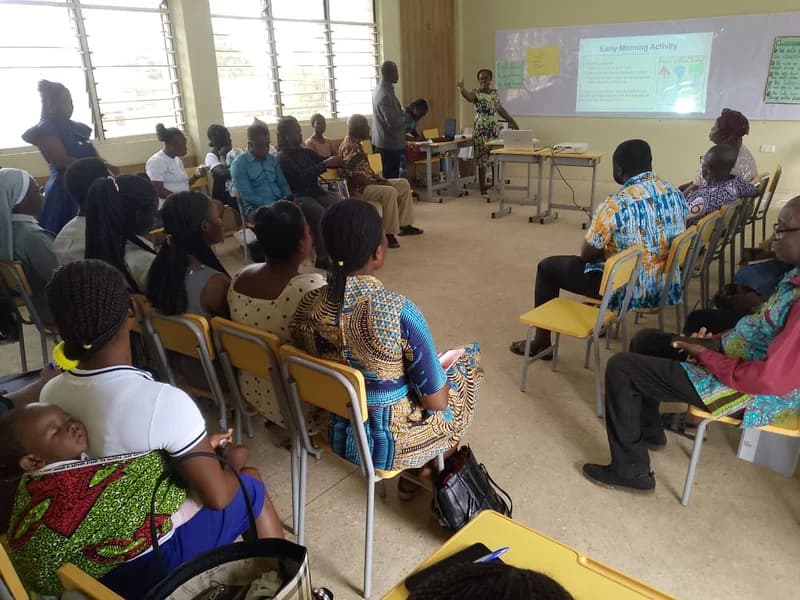
Stakeholders in Ghana's education sector are intensifying efforts to reform teaching standards by prioritizing practical skills and foundational learning. This week, Professor Frederick Kwaku Sarfo, Vice-Chancellor of the Akenten Appiah-Menka University of Skills Training and Entrepreneurial Development (AAMUSTED), called on newly graduated teachers to move beyond their academic certificates and embrace innovation. Simultaneously, in the Sunyani East and West municipalities, approximately 400 kindergarten educators completed an intensive two-week training program designed to modernize classroom activities and implement the national early childhood curriculum.
Speaking at the 16th convocation of the Komenda College of Education, Professor Sarfo emphasized that the modern educational landscape requires teachers to act as facilitators of knowledge rather than mere transmitters of information. The ceremony celebrated the graduation of 457 students, including 207 females, across various Bachelor of Science Education programs. Both Professor Sarfo and the College Principal, Dr. Kwesi Nkum Wilson, underscored the necessity of ethical professionalism, digital literacy, and innovative pedagogies. They urged the new cohort to remain lifelong learners and adapt to rapid technological changes to drive national development.
Complementing this push for professional excellence, Sabre Education, in partnership with the Ghana Education Service (GES), organized specialized in-service training for kindergarten heads and proprietors in the Bono Region. The program focused on the revised KG curriculum, which aims to equip young learners with essential 21st-century skills. Mr. Theophilus Cudjoe of Sabre Education noted that the training is particularly vital for the private sector, where many teachers may lack formal backgrounds in early childhood education. By addressing these professional gaps, the initiative seeks to ensure a stronger foundation for students entering the formal school system.
These dual initiatives reflect a growing national priority to address learning gaps from the earliest stages of schooling through to higher education. By fostering partnerships between non-governmental organizations, the GES, and tertiary institutions, Ghana aims to produce a workforce of educators who are not only certified but are also skilled practitioners. As these 457 new graduates enter the field and 400 existing teachers update their methodologies, the collective focus remains on transforming the classroom experience to better serve the needs of the next generation and enhance the country's overall educational quality.
Related topic
Ghana Education Service (GES): Latest News Today →

