Ghana’s December boom: who earns, who pays?
How homecoming became a tourism season—and why its success must be measured against the cost of ordinary life.
By Eddie Forson · 29 October 2026
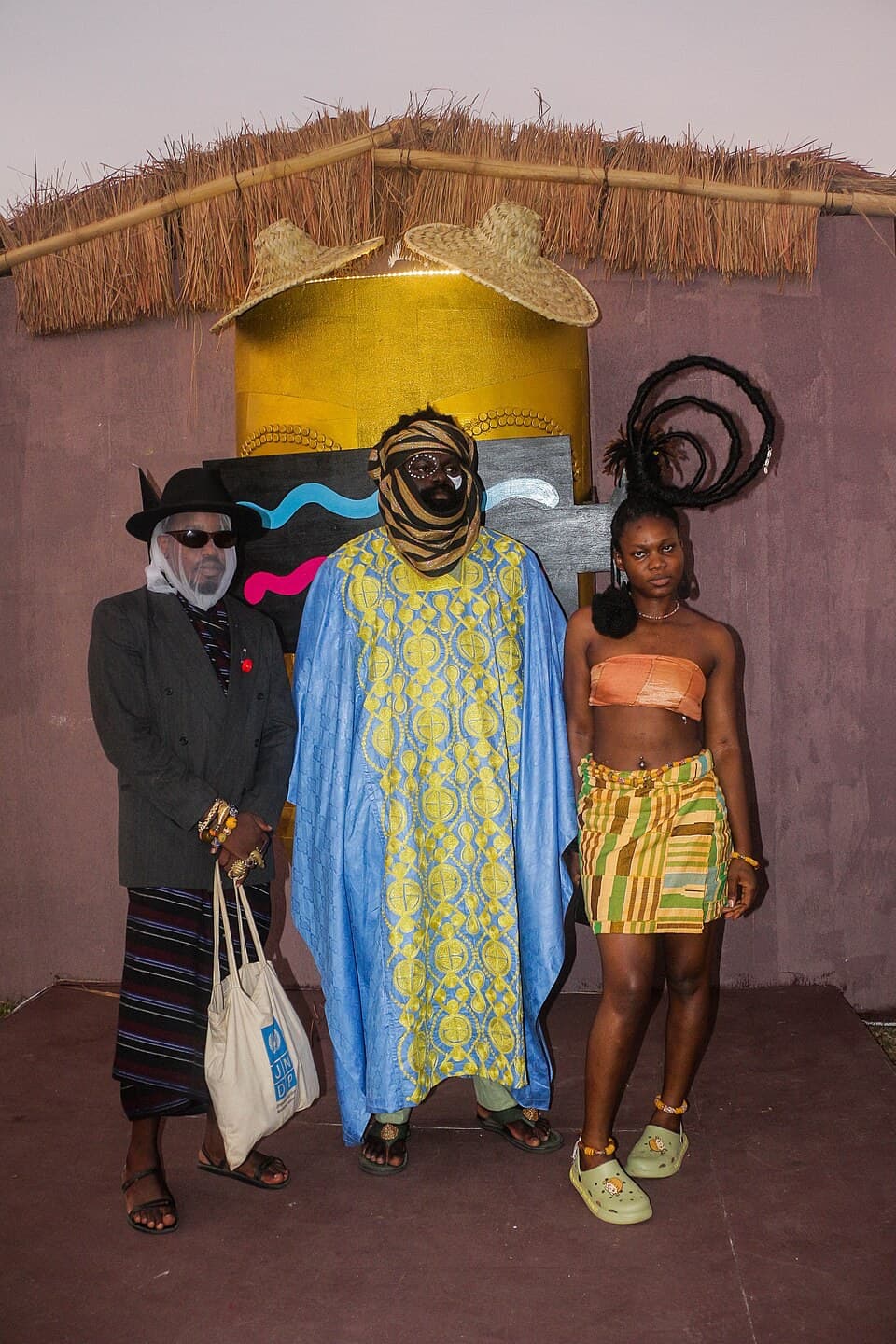
December in Ghana can be a homecoming, a business opportunity and a financial squeeze—all in the same street.
For the visitor, it is a calendar of reunions, concerts, food, fashion and heritage trips. For a hotel owner or a caterer, it can mean a valuable run of bookings. For someone earning in cedis, the question is different: can you still afford to take part, get around and pay for ordinary life when the city is selling a premium experience?
The choice is not between celebrating Ghana and criticising tourism. It is between counting the people who arrive and understanding what their arrival changes for the people who live here.
Ghana has built a December season with international appeal. Its lasting value depends on how much visitor spending reaches local workers and businesses, how widely it travels beyond the main venues, and whether residents share in the experience rather than simply absorb its costs.
Before the brand, there was the homecoming
“Detty December” is a popular name, not a single festival or the official name of Ghana’s tourism programme. It describes a loose season of parties, concerts, reunions and travel, shared most visibly with Nigeria. “Detty”, a playful rendering of “dirty” in West African Pidgin, signals uninhibited fun—not a description of Ghana itself.
The season, the label and the government campaign have different histories. In a December 2025 BBC interview, Ghana’s diaspora-affairs official Kofi Okyere-Darko recalled December activity around the turn of the millennium and initiatives such as Akwaaba UK. Homecoming did not begin with the government’s 2019 Year of Return campaign. The BBC’s account associates the phrase’s rise with Nigerian musician Mr Eazi’s Detty Rave festival in Accra.
Afrochella, which began in 2017 and became AfroFuture in 2023, helped turn music, fashion and diaspora connection into a destination experience. The Year of Return then gave Ghana’s invitation a powerful public platform in 2019, commemorating 400 years since the arrival of the first recorded enslaved Africans in the English colonies in North America. It amplified an existing relationship; it did not invent it.
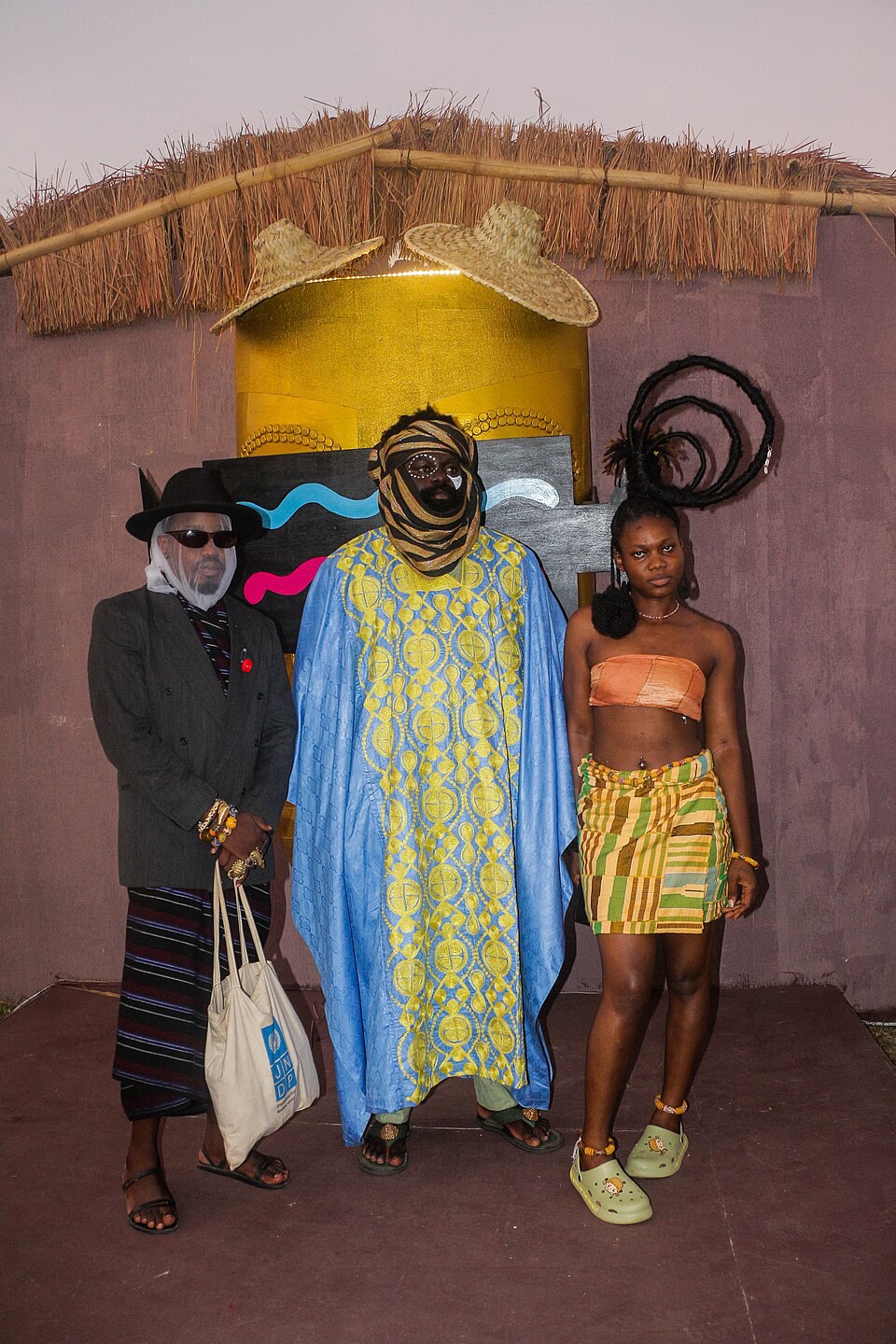
An archive photograph from Afrochella, before its rebranding as AfroFuture—not a photograph of the forthcoming 2026 season. Photo: Fquasie / Wikimedia Commons, CC BY-SA 4.0. Resized; no crop.
That distinction matters. Reducing December to nightlife misses the relatives coming home, the visitor exploring their ancestry and the designer finding an audience. Reducing it to a government success story misses the artists, promoters, businesses and families who made the season worth travelling for.
A bigger December does not guarantee a richer tourism economy
The Ghana Tourism Authority’s 2025 report records 141,186 international arrivals in December 2025, up 11.4% from December 2024. December was the busiest arrival month in each year from 2023 to 2025.
Monthly international arrivals, 2025
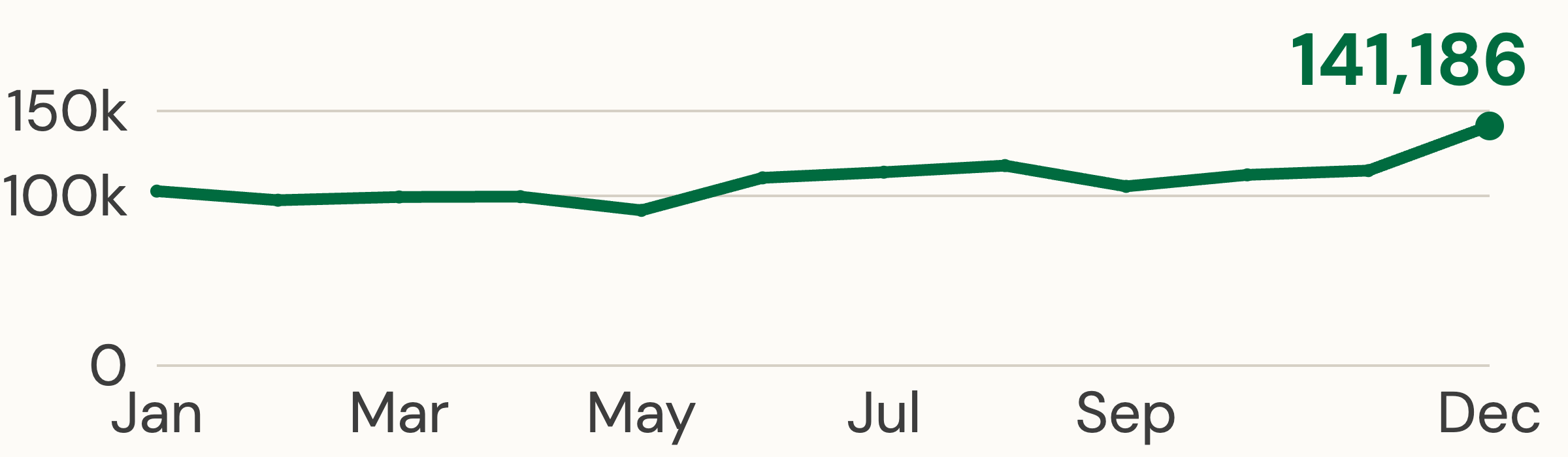
International arrival entries, not festival attendance or unique people. Source: Ghana Immigration Service, reproduced in GTA, 2025 Tourism Report, Table 1 (PDF page 18). Chart: Anansi News.
But December accounted for about 10.8% of the year’s international arrivals. It is important, not the whole tourism economy. The annual visitor survey identifies business affairs as the largest purpose-of-visit category, at 31%. Not everybody entering Ghana in December is attending a concert, and not every tourism dollar is earned during the festive season.
The wider results complicate the boom narrative. Annual international arrivals increased from 1,288,804 in 2024 to 1,306,962 in 2025, a rise of about 1.4%. Yet average international visitor expenditure fell by about 11.3%.
Average visitor spending fell 11.3%
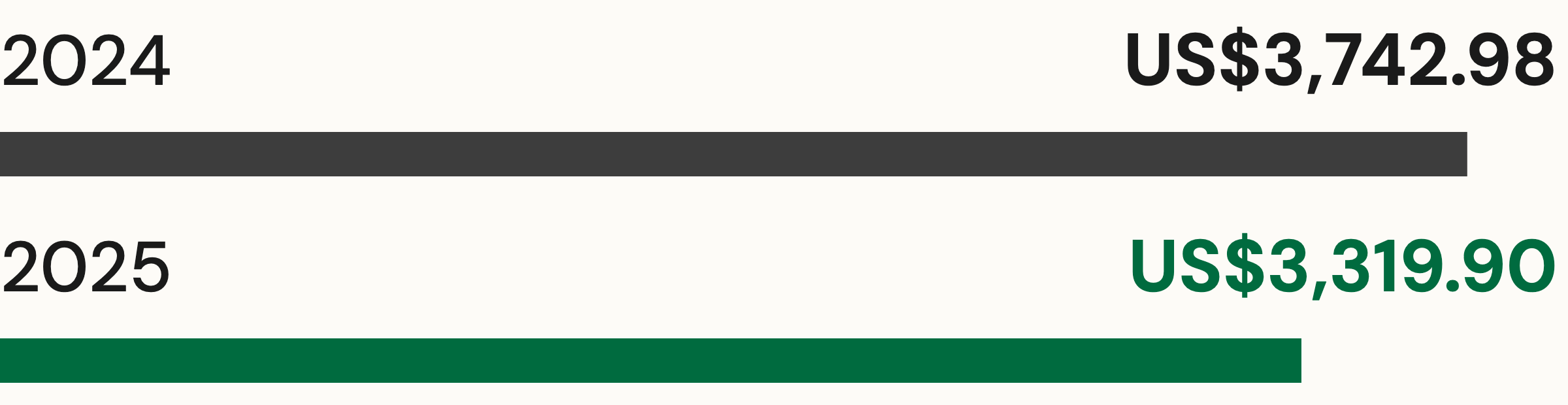
All-year survey averages in US dollars, not December-only spending or a recommended travel budget. Source: GTA/Ghana International Travellers Survey, 2025 Tourism Report, Table 3 (PDF page 20). Chart: Anansi News.
GTA’s receipts table and accompanying explanation put estimated annual tourism receipts at approximately US$4.34 billion in 2025, down from US$4.82 billion in 2024. The report’s snapshot gives a conflicting US$4.38 billion figure; this analysis uses the table and narrative, also supported by multiplying the reported arrivals by average expenditure.
Neither number is Detty December’s revenue. Nor is either a measure of the money ultimately retained by Ghanaian households. They describe estimated gross international visitor spending across the year.
The distinction is economic, not semantic. A hotel bill can pay a local worker and a Ghanaian supplier. It can also cover imported goods, overseas booking fees or payments to owners outside Ghana. A rise in sales does not tell us how those payments are divided.
The upside is real—and it is not only hotel rooms
The strongest case for the season is that Ghana can sell an experience rooted in its own culture. Music draws an audience; food, fashion, art and heritage give people reasons to stay and spend beyond the main stage.
ABC’s reporting from AfroFuture describes vendors selling woven bags, jewellery and clothing around the festival, alongside food stalls. Those are concrete commercial opportunities, even though they do not establish the profits earned by every vendor.
The opportunity extends along a chain: event production, sound and lighting, photography, catering, transport, accommodation, guiding and retail. A business that wins repeat customers can carry some of December’s value into the rest of the year. Whether workers receive better pay or merely longer hours is a separate question that sales totals cannot answer.
There is also value that a tourism-receipts estimate cannot capture: seeing family, reconnecting with ancestry, discovering contemporary Ghanaian culture and forming professional relationships. The BBC’s 2025 reporting describes investment seminars, networking sessions and cultural showcases alongside the parties. These create opportunities; attendance alone is not proof of completed investment.
For Ghana, the strategic prize is a reputation that produces return visits and durable relationships. The danger is treating a successful month of promotion as a substitute for a year-round tourism economy.
The cost of visiting: the ticket is only the beginning
A December trip is not one purchase. It is a stack of costs: flights and any entry requirements, accommodation, meals, local travel, event tickets, gifts and a margin for changes. A returnee staying with relatives has a very different budget from a first-time visitor booking a hotel and paid events every night.
There is no defensible single “cost of Detty December” covering both people. Prices depend on booking date, location, length of stay and the kind of experience being bought.
Two reported examples show the range without pretending to be a market average. At the 2023 AfroFuture festival, a Ghanaian accounting student and business owner told ABC she had paid GH¢2,000 for a VIP ticket. That was a premium ticket at a particular event—not the minimum price of joining Ghana’s December celebrations, and not a 2026 quote.
In Travel Noire’s December 2025 reporting, traveller Giovonna Bennett said an 11-day Accra hotel booking costing under US$600 had been cancelled, after which she found the same room advertised for more than US$4,000 for the festival period. This is one traveller’s reported experience, not an independently audited price history or proof of a typical Accra increase. It illustrates a risk worth planning for: even an early booking may not protect a visitor if the booking is not honoured.
For visitors, the useful question is therefore not simply whether Ghana is “cheap”. It is which prices are confirmed, what cancellation protections apply, and what the full trip will cost in the currency in which they earn.
The resident’s budget starts with food, not VIP
For a resident, affordability cannot be judged against an international holiday budget. The starting point is ordinary income and essential spending.
MoFA’s second-quarter 2025 Cost of a Healthy Diet bulletin puts the national average at GH¢14.80 per person per day. This is the least-expensive combination of available foods meeting Ghana’s dietary guidelines. It is not a restaurant bill, a measure of what every household actually buys, or a complete living-cost estimate.
The bulletin used weekly retail prices from 185 markets across 14 regions; Central and North East were excluded for lack of data. It reported a wide regional range, from GH¢9.27 in Ahafo to GH¢23.05 in Western. A national average is not an Accra price list.
Ghana’s daily minimum wage was GH¢19.97 from 1 March 2025. Using that wage and the Q2 food benchmark gives a transparent, same-period illustration: 26 paid days would produce GH¢519.22 gross; 30 days of the food benchmark for one person would cost GH¢444.00. That leaves GH¢75.22 before rent, utilities, transport, cooking fuel, healthcare, dependants or leisure.
A narrow margin after food
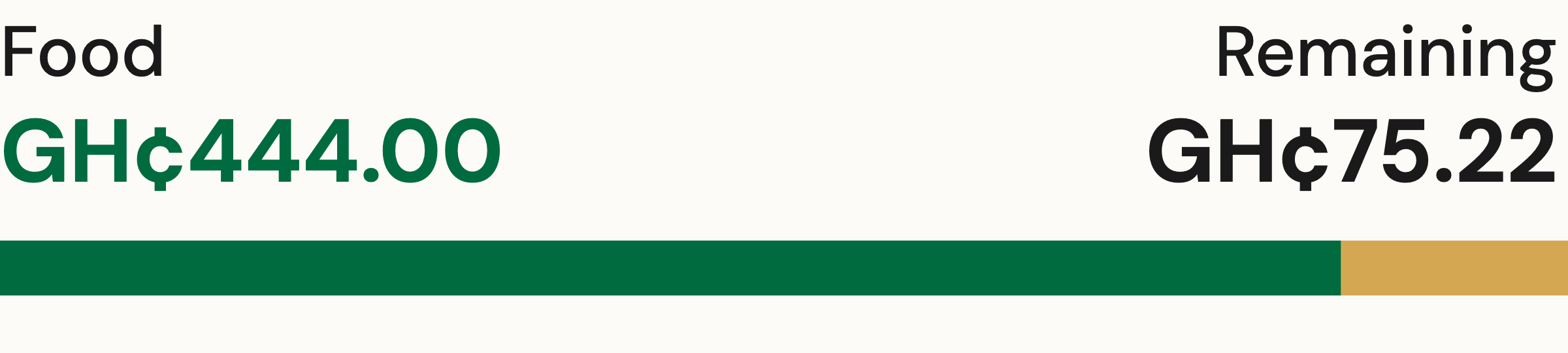
Illustration, not an observed household budget or an official monthly wage. Food: MoFA, Q2 2025. Wage: GH¢19.97/day, effective March 2025. Assumptions: one person, 30 food days, 26 paid workdays; no deductions, benefits or other income. Chart and calculations: Anansi News.
The daily floor rose to GH¢21.77 from January 2026. The chart deliberately keeps both inputs in 2025 rather than pairing that newer wage with older food prices and calling the result current.
This is not a claim that every Ghanaian earns the minimum wage. It shows how little room there can be at the wage floor before any festival premium appears. An individual supporting others, or receiving fewer paid days, faces a different calculation.
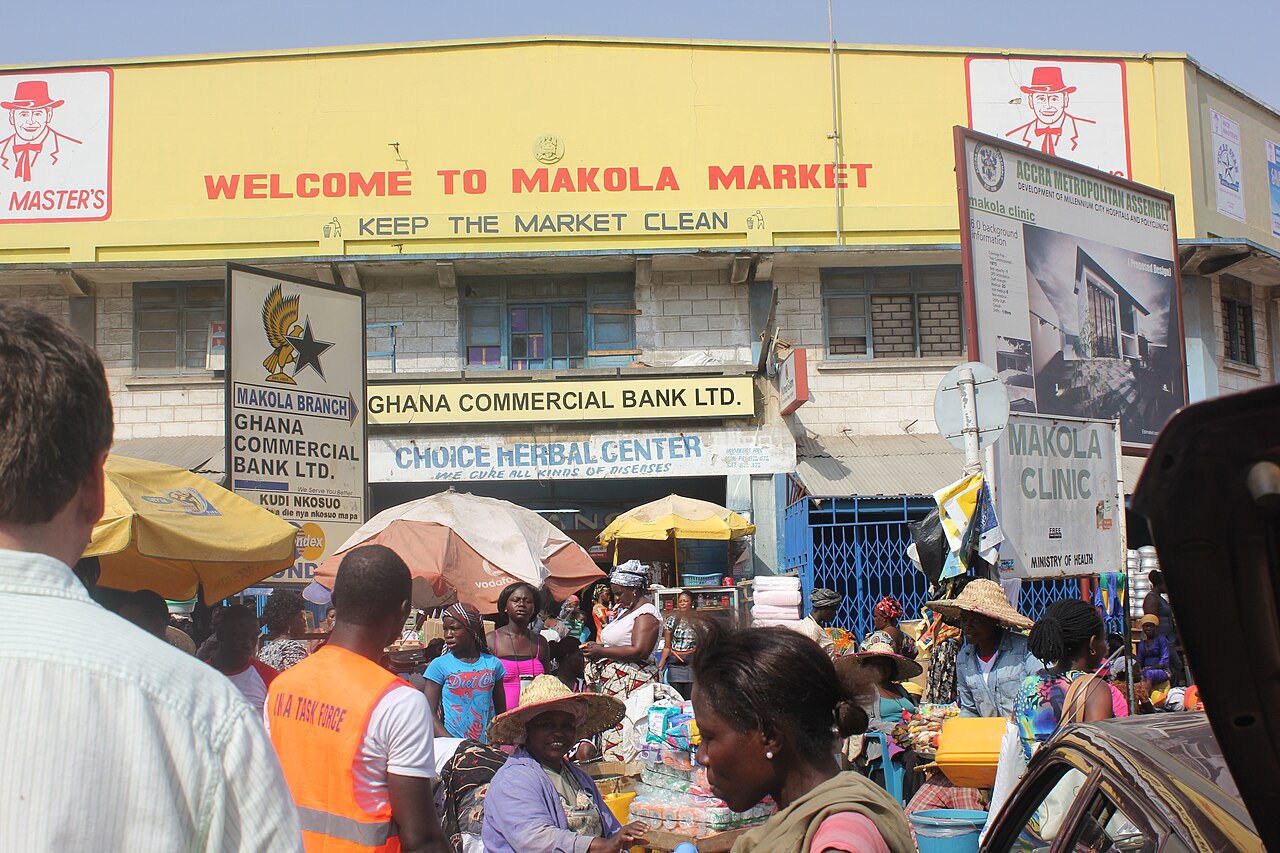
Makola Market, Accra: ordinary commerce sits alongside the city’s visitor economy. Archive photograph from February 2013; not evidence of current prices or December crowding. Photo: Benggriff / Wikimedia Commons, CC BY-SA 3.0. Resized; no crop.
The cost-of-living issue is broader than whether someone can buy a concert ticket. A resident may choose not to attend an expensive event, but cannot always choose to avoid the roads, neighbourhood or services around it. That makes any seasonal pressure on essential travel or housing more consequential than premium entertainment pricing.
A complete current Accra budget would require separately dated observations for rent, electricity, water, cooking fuel, food and commuting, together with household size and income. The sources reviewed do not provide that matched basket, so this analysis does not manufacture one. The official food benchmark is a grounded affordability reference, not a substitute for the missing full budget.
What December can make dearer—and what we cannot blame it for
A high-demand season can put pressure on short-stay accommodation and the services used by visitors. The BBC reports complaints from some Ghanaian locals about price gouging, overcrowding and intense traffic during December. These are documented complaints, not a measured estimate of the average resident’s extra spending.
Three different price stories must stay separate:
-
Premium entertainment: a VIP ticket is an optional product. Its price says something about access to that event, not the price of ordinary food or transport.
-
Shared local services: if visitors and residents compete for the same accommodation or transport capacity, seasonal demand can affect access. Establishing the size of that effect requires comparable bookings, routes and dates—not isolated social-media posts.
-
The national cost of living: broad inflation is a different measure. Lower inflation means prices rise more slowly, not that the earlier increases have disappeared. The evidence reviewed does not establish that Detty December causes Ghana’s national inflation or long-term rental increases.
There is no measured December-wide surcharge in this analysis. Nor is the hotel anecdote used to estimate what has happened to all Accra rents. The distinction protects the central argument: people can face genuine affordability pressures without every price increase being caused by tourism.
Congestion has a cost even when nobody receives a separate bill for it: travel time and reliability matter to workers as well as partygoers. Noise, waste management and public safety also belong in event planning. These are costs organisers and public authorities should account for; the sources reviewed do not provide a defensible December-specific monetary total for them.
Ghana is bigger than its busiest December venues
The season’s effect depends partly on where visitors go and whom they buy from. A business near a busy venue can gain while another community sees little additional demand. Local ownership alone does not settle the issue either: sourcing, wages and the terms offered to small suppliers determine how far sales circulate.
GTA’s broader tourism data shows both opportunity and concentration. In 2025, 77% of recorded visits to 55 monitored tourist sites went to the top ten sites. Those ten were concentrated in Greater Accra, Central, Ashanti and Eastern. This is all-year site visitation—not December spending or a regional income league table—but it challenges the assumption that popularity automatically spreads benefits evenly.
Residents accounted for 84% of visits to those 55 monitored sites. Ghanaian residents are therefore central to the tourism market, not merely the backdrop to an international visitor experience.
| Group | Where the upside can come from | What determines whether it lasts |
|---|---|---|
| Local businesses and suppliers | More customers, orders and exposure | Margins, stall and booking fees, local procurement and repeat custom |
| Workers and freelancers | More shifts and production contracts | Pay, hours, safety, payment timing and work after the season |
| Residents outside the visitor trade | Cultural access and better shared services | Affordable access, reliable transport and public management of disruption |
| Communities beyond the main venues | Heritage trips, guiding and local purchases | Actual bookings and local purchases—not simply inclusion in a campaign |
| Ghana’s public finances | Taxable commercial activity | Collection and compliance, set against the public cost of hosting |
These are economic channels and assessment questions, not measured gains or losses for every group.
The wrong response is to assume that visitors are the problem. The equally weak response is to assume that every dollar spent benefits everyone. A useful assessment asks who receives the payment, who bears the operating cost, and who is left out.
A better December would be measured after the party
Ghana does not need to choose between an exciting December and a liveable city. It needs a clearer account of the bargain.
First, measure local earnings, not just arrivals. Report event-linked supplier purchases, worker pay, public operating costs and the share of spending reaching locally based businesses. Keep December estimates separate from annual receipts.
Second, protect trust. Clearly advertised total prices, honoured accommodation bookings and workable refund terms are part of the visitor experience. Repeated disputes can damage the relationships the season is meant to build.
Third, plan for the residents using the same city. Transport access, crowd management, waste collection and noise controls should be part of hosting a season, not matters deferred until complaints arrive. Where extra services are funded, residents should benefit too.
Fourth, widen the offer without simply moving the pressure. Heritage, food, nature and cultural visits beyond the main venues can create more opportunities, but only if local businesses have the capacity and terms to benefit. Year-round demand is more durable than a few exceptional weeks.
After December 2026, look beyond the arrival total: were bookings honoured, did local suppliers and workers earn more after costs, did visitors travel beyond the main venues, and were residents able to use their city? Those answers would reveal more than another headline about a tourism boom.
The strongest version of Detty December is not one in which Ghana looks inexpensive to somebody earning abroad. It is one in which a visitor’s memorable holiday produces worthwhile income and relationships here—without making ordinary life harder for the people who stay when the season ends.
About the evidence
This analysis was researched on 29 October 2026. It uses completed-year 2025 tourism results and explicitly dated price examples; it makes no claim about the outcome of December 2026. Arrival data comes from Ghana Immigration Service records reproduced by GTA. Visitor spending comes from GTA’s Ghana International Travellers Survey, which interviewed 2,926 departing visitors at Accra International Airport in 2025; the report does not fully explain the weighting used to extend spending estimates across all arrivals.
The report’s December expenditure-category amounts are not used as a daily or whole-trip budget because that section does not clearly state the time denominator. Food and wage calculations are historical illustrations, not current quotations or a living-wage estimate. No original resident interviews or independent hotel-rate audit were conducted for this draft.
Sources
- 1.Ghana Tourism Authority. Ghana Tourism Report 2025: Resilience and Sustainable Growth (p. PDF pp. 14–21, 32–34, 45–48)
- 2.BBC News. Ghana official not comfortable with Detty December label (22 December 2025)
- 3.Visit Ghana / Ghana Tourism Authority. Year of Return, Ghana 2019
- 4.ABC News Australia. How Afrofuture has turned Ghana into a cultural mecca (17 February 2024)
- 5.Travel Noire. When Detty December Gets Dirty: Price Gouging, Burnout Hit West Africa’s Biggest Party (2 December 2025)
- 6.Ministry of Food and Agriculture, SRID. Cost of a Healthy Diet in Ghana, 2025 Quarter 2 Bulletin (p. PDF p. 2)
- 7.Prime News Ghana. National Daily Minimum Wage increased to GH¢19.97 (20 February 2025)
- 8.MyJoyOnline. Government increases minimum wage by 9%, effective January 1 (9 November 2025)
Related: Immigration Service Recruitment